You've got twelve tabs open, three carts half-filled, and one annoying question still hanging there, which alcohol marker brand won't waste your money? That's the core problem. People don't need more hype, they need a set that blends cleanly, survives regular use, and doesn't turn into dead plastic the second you start drawing every day.
| Brand | Build | Ink Feel | Nibs | Refillable | Color Range | Price Tier |
|---|---|---|---|---|---|---|
| Copic | Premium, sturdy, made for long use | Smooth, predictable, very controlled | Strong brush and replacement support | Yes | Broad and well established | High |
| Prismacolor Premier | Familiar and easy to start with | Soft, blend-friendly, can feel looser | Common nib support, but not the deepest ecosystem | Limited relative to refill-first systems | Wide enough for many hobbyists | Mid to high |
| Ohuhu | Good value, lighter-duty | Often feels lively and accessible | Varies by set, practical for casual work | Yes, in many systems | Large set-driven approach | Budget to mid |
| Winsor & Newton | Clean, refined, more portrait-friendly | Polished and deliberate | Good for controlled work | Yes in selected lines | Curated rather than endless | High |
| Spectrum Noir | Straightforward, beginner-friendly | Even and easy to learn | Serviceable for daily coloring | Yes in system-based lines | Balanced for general use | Budget to mid |
| Arteza | Portable and approachable | Often softer, less technical | Adequate for casual coloring | Limited compared with pro systems | Set-focused | Budget |
Why Picking the Right Alcohol Marker Brand Actually Matters
You know that moment when you're staring at a wall of sets, each one promising “smooth blending” and “professional results,” and all the boxes start looking the same? That's usually when people buy the cheapest set with the biggest color count, then wonder why the ink feels muddy or why half the markers feel tired almost immediately. The brand matters because ink chemistry, nib feel, and refill support shape how the marker behaves on the page and how long it stays useful.
The three mistakes that burn beginners
The first mistake is chasing color count instead of usable range. A bigger set looks impressive, but if the colors are badly spaced, you still can't build clean gradients. Industry guidance even recommends beginners start with at least 70 markers to get a usable blending range, which tells you how quickly tiny starter kits hit a wall (Art Is Fun).
The second mistake is ignoring refillability. A marker brand that can't be refilled turns every dry color into a recurring replacement purchase. That's not a workflow, that's leakage.
The third mistake is buying based on barrel design alone and ignoring nib feel. A brush nib that splays too quickly or a chisel tip that feels scratchy can make the whole set feel worse than it is. The best brands solve all three problems at once, they give you a workable color system, parts you can replace, and a feel that doesn't fight you.
Practical rule: buy for the art you make every week, not the box you want to show on a shelf.
That's why serious buyers look beyond the label and ask a boring but useful question, can I keep this system alive? Premium brands can last for years, even decades, if refilled and maintained (Art Is Fun). That's the difference between a disposable impulse buy and a real tool.
What Makes an Alcohol Marker Different From the Rest
Alcohol markers behave differently because the ink is built differently. In plain terms, they dry fast, layer smoothly, and reward confident strokes more than wet blending tricks. That's why one brand can feel buttery and another can feel sharp or dry, even when both are labeled with the same color family.
The ink inside the barrel
The core formula is simple, but the feel isn't. Alcohol-marker inks are typically built from colorant, resin, and alcohol, and the alcohol acts as the main volatile solvent that speeds drying while tuning viscosity and flow (Ohuhu). That's the technical reason the same “skin tone” can behave differently across brands, one brand may feather softly while another sinks faster and leaves harder edges.
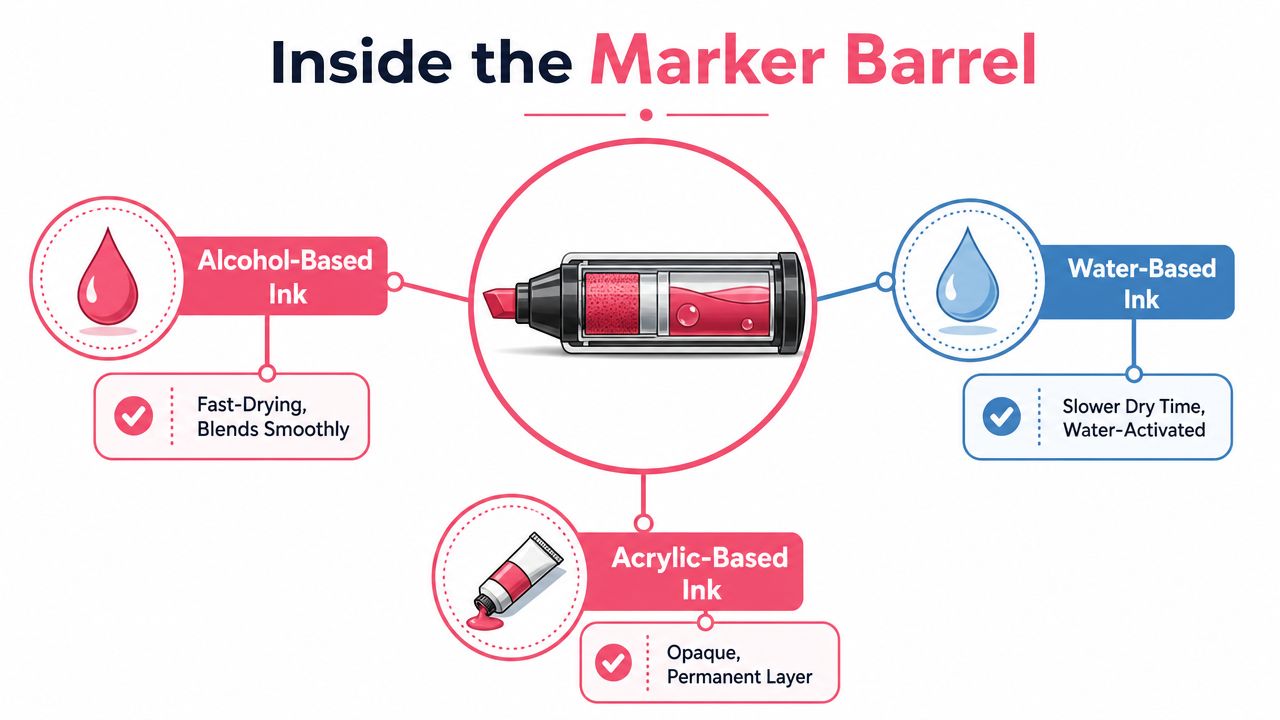
Water-based markers move slower and usually invite more reactivation. Acrylic markers sit in a different lane altogether, they cover more opaquely and behave more like paint in marker form. Alcohol markers are the middle path for most illustrators, because they dry quickly enough for layering but still give you the blended transitions people want for portraits, comics, and cozy coloring pages.
Why feel changes from brand to brand
Shoppers get fooled by color names. “Rose Pink” on one barrel doesn't mean the same stroke behavior as “Rose Pink” on another barrel. The formulation changes the flow, and the nib changes how that flow reaches the paper.
If you're comparing brands seriously, don't stop at color charts. Look for measurable quality controls like ASTM D4296 or ISO 12040 lightfastness certification, plus batch-code traceability and refill and nib serviceability (Alibaba product insights). Those details don't sound glamorous, but they're the difference between a set you use and a set you babysit.
The Big Six Alcohol Marker Brands at a Glance
The fastest way to compare alcohol marker brands is to stop treating them like they're all serving the same job. They're not. Some brands are built for long-haul studio work, others are built for easy starter use, and some are better as portable color kits than as long-term systems.
| Brand | Build | Ink Feel | Nibs | Refillable | Color Range | Price Tier |
|---|---|---|---|---|---|---|
| Copic | Best-in-class, durable | Very smooth, highly controlled | Excellent brush support | Yes | Deep, established | High |
| Prismacolor Premier | Familiar, solid starter build | Soft and forgiving | Good, but less system-heavy | Limited | Strong for general use | Mid to high |
| Ohuhu | Light, practical, value-first | Easy to pick up | Functional and set-dependent | Yes | Very broad in sets | Budget to mid |
| Winsor & Newton | Refined and deliberate | Clean, polished | Strong for controlled work | Yes in selected lines | Curated | High |
| Spectrum Noir | Clean and approachable | Even, easy to learn | Serviceable | Yes | Balanced | Budget to mid |
| Arteza | Casual and portable | Soft and accessible | Good enough for hobby use | Limited | Set-based | Budget |
Use the marker comparison tool to test your shortlist against your own workflow.
What the table really says
Copic sits at the top for artists who want a true refill-first system. It's the reference point because the line is built around maintenance, not throwaway use. Prismacolor Premier stays popular because the color laydown is easy to like, but it's not the strongest choice if you want a deep service ecosystem.
Ohuhu is the practical value pick. It's the brand people reach for when they want a lot of usable color without paying for prestige. Winsor & Newton feels more refined and targeted, which suits portraits and controlled work better than bulk coloring sessions.
Spectrum Noir and Arteza both make sense for different kinds of casual users. Spectrum Noir tends to feel more like a structured starter path, while Arteza is better when portability and price matter more than deep servicing. If you're building a real toolset, not just buying a box, the refill question matters more than the logo.
Matching the Right Marker to Your Style of Coloring
The right brand depends on how you color, not how you wish you colored. A manga artist and a cozy adult colorist can both buy the same set and have opposite reactions to it. One wants crisp edge control. The other wants a relaxed blend that doesn't punish hesitation.
Pick by use case first
Hobby colorists working in Jade Summer or Coco Wayo books usually do best with brands that feel forgiving and simple to manage. Ohuhu fits that lane well because the sets are easy to approach and don't demand a studio-level budget. Spectrum Noir also makes sense when you want a straightforward learning curve and decent control without chasing a premium badge.
Manga and comic artists need tighter line control and more predictable tip behavior. Copic is the cleanest answer here because the system is built for repeatable results and long-term use. Winsor & Newton can also work for artists who want a more curated, polished feel, especially for portraits and controlled gradients.
Use case first, brand second. A flashy set that fights your workflow is still the wrong set.
Illustrators chasing painterly blends should care about nib response and refill stability more than packaging. If the brush nib holds up and the ink behaves consistently, the brand earns its place. If the set looks great on a product page but collapses under repeated layering, it's a bad fit no matter how pretty the swatches are.
Try a palette before you commit to a marker set. That's the smartest way to see whether your favorite color families match the brand you're considering.
The wrong match costs more than the right one
The mistake I see constantly is hobbyists buying a pro brand for casual coloring and then treating the price as proof of quality. Price is only useful when it lines up with your actual workflow. If you color for relaxation, a leaner, easier system often beats a prestige set that asks you to baby every marker.
On the flip side, a manga artist who wants precision shouldn't settle for a bargain box just because it has a huge color count. If the nibs don't cooperate, the set slows you down. The best marker brand is the one you can use without thinking about the brand at all.
Refill Systems and Long-Term Cost Per Color
Buying a set is the easy part. Keeping it useful is where the cost shows up. Once you start using alcohol markers regularly, you are paying for ink, replacement nibs, and the ability to keep your best colors in rotation instead of rebuying whole sets.
Why refill systems matter more than the box price
A marker brand earns trust when it treats the marker like a working tool, not a sealed toy. Big brands in this space keep building refill ecosystems because people stay in the category and keep using the same colors for a long time. That matters if you draw often, because the cheapest box on the shelf can turn into the most expensive habit if you keep replacing entire sets.
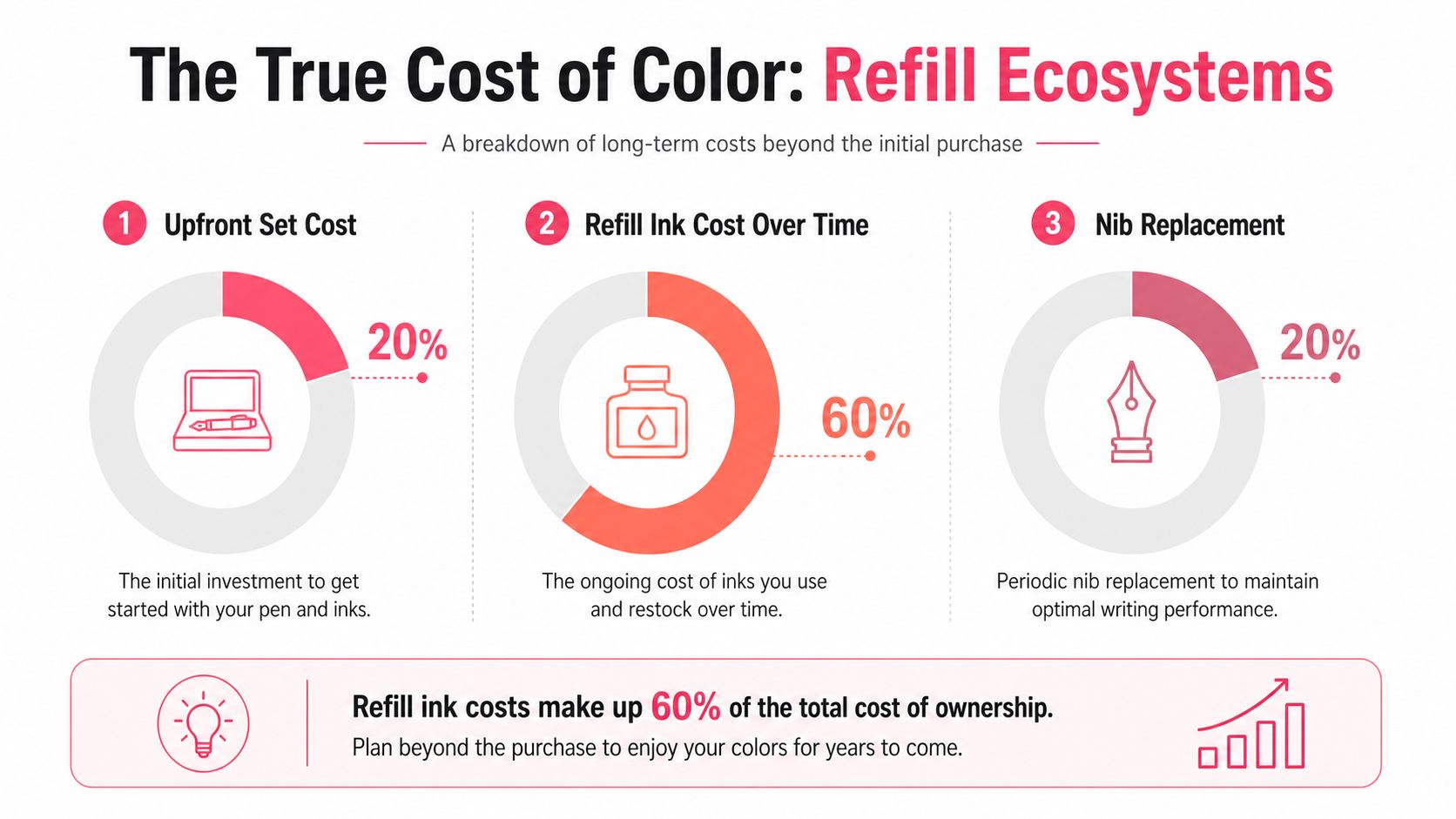
Copic is still the clearest example of a refill-first system. It is built for artists who want to keep the same markers alive, replace worn nibs, and buy only the colors they use. Ohuhu's refill ink approach makes more sense for value buyers who want to stretch a favorite set without paying for a whole new tray. Spectrum Noir's snap-and-fill style fits artists who want maintenance to stay simple, while Prismacolor and Winsor & Newton make more sense when you are building around a few specific color families instead of chasing a giant all-purpose library.
The practical cost test
The question is not what the markers cost on day one. Ask what happens when a skin tone runs dry, when a black nib gets tired, or when you need one cooler gray instead of a full replacement set. That is the part of the workflow that separates a smart buy from a wasteful one.
If a brand supports replacement nibs and dependable refills, it keeps its value. If it pushes you toward full-set replacement, it gets expensive fast. The marketing might call both options professional, but your workspace tells the truth.
Use the refill conversion tool before you buy duplicates. It keeps your palette planning tied to real replacement behavior instead of guesswork.
Price Tiers and Starter Kits Worth Your Money
The cheapest marker set is usually the most expensive mistake. Tiny sets with awkward spacing waste time because you keep fighting the gaps between colors, and a better-curated set saves time because your blends land where they should. That matters whether you are sketching for fun, building manga pages, or coloring a cozy spread after work.
Under $40, buy learning tools, not bragging rights
At this level, I want a set that teaches you how alcohol markers behave, not a box that looks impressive on a shelf. Pick a starter pack with enough range to test skin, shadow, and a few neutrals without forcing you to guess every transition. Ohuhu is the practical value pick here, and Spectrum Noir also makes sense if you want a gentler learning curve and less friction while you practice.
$40 to $150, start thinking in workflows
This is the range where serious hobbyists stop buying random colors and start buying usable systems. A larger Ohuhu kit is usually the safest recommendation because it gives you a broader working range without pretending to be a luxury studio setup. Prismacolor Premier and Winsor & Newton can fit here too, but only if the set matches the kind of coloring you do, not the brand image on the box.
$200 and up, buy a system you'll keep
At this level, the set should act like a long-term tool, not a one-time haul. Copic Sketch is the clear pick for artists who want a refill-first system they can keep building over time. Starter advice from Art Is Fun points beginners toward a wider blending range, and that advice holds up, because premium markers only feel premium when you have enough nearby colors to blend cleanly and keep the set useful after the first week.
Strong opinion: if you are spending pro money, the kit should make future expansion easy. If it does not, you are paying extra for packaging and buying problems with it.
Skip the giant filler-heavy set that looks generous but gives you a pile of near-duplicate hues. Curated beats bloated every time. The best starter set is the one that lets you finish art, not just admire the lid.
Buy or Skip, Honest Verdicts for Each Brand
Skip the polite marketing language. Each brand has a job, and the wrong choice shows up fast in blending time, portability, and how much you burn through ink over a long session.
My call on the six big names
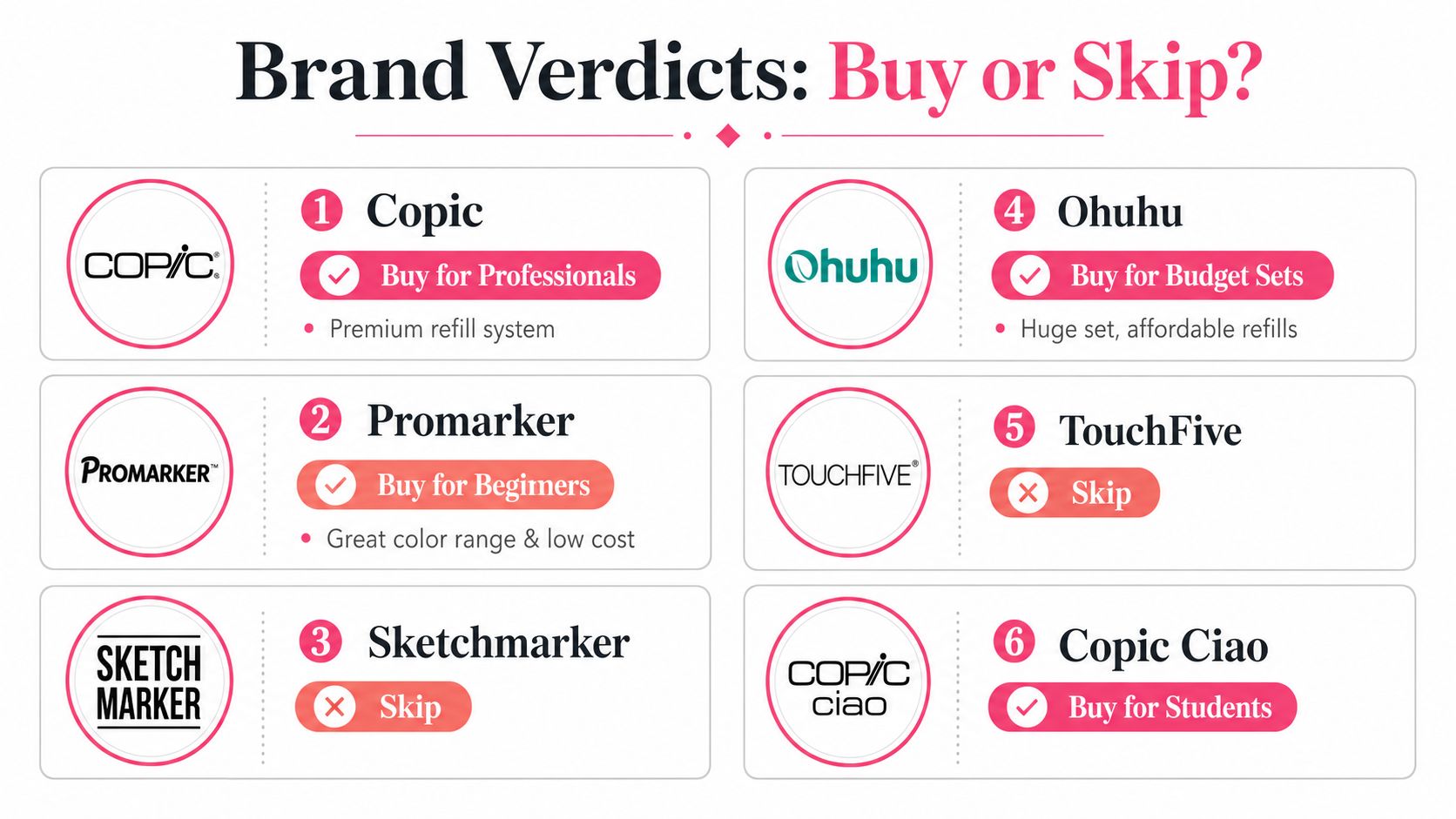
- Copic, buy if you want a long-term system and plan to refill your markers. It is the clearest pick for artists who keep the same set in rotation and want steady blending across a growing palette. The downside is simple, it is expensive, and casual users usually do not need that level of commitment.
- Prismacolor Premier, buy if you want a familiar set for regular coloring and illustration. It works well for hobbyists and cozy colorists who care more about smooth laydown than a heavy servicing setup. Skip it if you are obsessed with the deepest possible service ecosystem, because that is not its strongest edge.
- Ohuhu, buy if value matters and you want a big usable set without wrecking your budget. It is the easy recommendation for hobbyists who want lots of workable colors, decent portability, and a low-stress way to color often. Skip it if archival consistency and pro-grade servicing are your top priorities.
- Winsor & Newton, buy if you do portraits or controlled, polished coloring. It suits artists who want disciplined blending and a more deliberate set, especially when skin tones and soft gradients matter. Skip bulk-style buying here, because this brand makes more sense as a deliberate choice than as a giant impulse set.
- Spectrum Noir, buy if you are a beginner who wants an easier entry point and a more forgiving learning curve. It fits people who are still learning how to blend without fighting the pen at every turn, and it is friendly for cozy coloring sessions. Skip it if you hate maintaining a more structured refill workflow.
- Arteza, buy for travel, casual coloring, or light experimentation. It makes sense for portable kits and low-pressure practice, where you care more about getting color on paper than building a forever system. Skip it for commission work if you need the most dependable long-haul system.
If you are serious, check for ASTM D4296 or ISO 12040 lightfastness certification, plus batch-code traceability and refill and nib serviceability before you commit. Quality control notes from Alibaba product insights can help you screen for those basics, but the true test is whether the brand keeps colors consistent and parts available after the first refill.
For a cleaner technical screen, look for published lightfastness information and quality-control standards from a source like The Ink and the Brush, which discusses marker performance and durability in practical terms. That matters more than flashy packaging. A brand that cannot support its own nibs, ink, or color matching will cost you more in the long run, even if the starter box looks generous.
Quick answers people keep asking
Are expensive markers always better? No. Better for whom matters more than expensive on its own.
Should beginners buy the biggest set? Not automatically. A usable range matters more than raw count.
Is refillability worth paying for? Yes, if you use markers regularly. It changes the cost of ownership.
Which brand is safest for most hobbyists? Ohuhu is the easiest all-around value pick, while Copic is the safest long-term system if budget is not tight.
Connecting Your Markers to a Digital Color Planning Workflow
Marker shopping gets easier when you stop guessing and start planning. The smartest artists match their physical set to a palette before the ink ever hits paper. That saves money because you buy the colors you need, not the colors a box tells you to want.
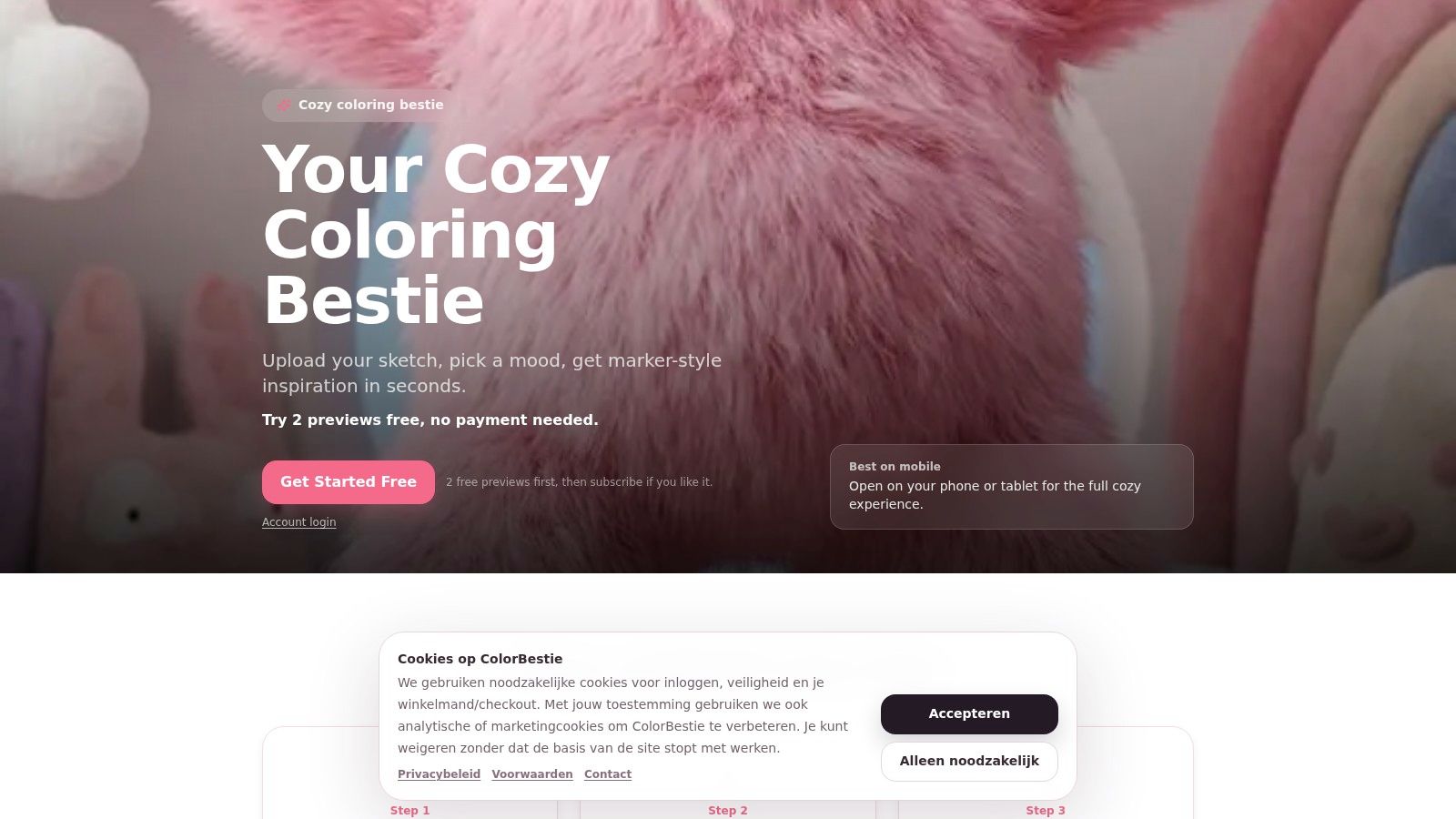
How the workflow should look
Start with the image or page you want to color, then test the palette against the marker brand you already own. That matters for hobbyists filling Jade Summer or Coco Wayo pages, because those books often live or die on whether your skin tones, shadows, and accent colors work together. It also matters for manga and comic work, where a bad palette wastes time and forces corrections.
A good digital planning tool should show you the shape of the palette before you buy more ink. If your current set has a warm gray you like, build around it. If you're missing a clean peach or a deep shadow color, buy that single gap instead of another random bundle.
Why brand-aware planning pays off
The win is control. You stop buying duplicate hues, and you stop assuming a brand switch will magically fix a bad palette. Brand-aware planning makes the physical set and the digital idea match, which is exactly what keeps coloring relaxing instead of chaotic.
That's the part most marker buyers never get around to. They buy a set first and plan later. The better habit is the opposite, plan the page, check the palette, then buy the missing colors with intent.
If you're tired of guessing which alcohol marker brands fit your style, start by planning your next palette before you buy another set. Try ColorBestie to preview marker-friendly color ideas, compare sets, and build a cleaner shopping list for your next page.