You've got a half-finished coloring page on the table, a fresh set of markers beside you, and one annoying question in your head. Which alcohol markers will look smooth on the page you use every day, not just in glossy brand photos?
I've spent enough time with Copic, Ohuhu, Prismacolor, and other alcohol markers to know the true test starts the second ink touches paper. Color count matters, but so do nib feel, bleed-through, refill cost, and whether a set still feels usable after a weekend of binge-coloring. The best alcohol markers for coloring are the ones that fit your paper, your hand, and how often you'll keep coming back to the set.
| Brand | Nib Setup | Approx. Color Count | Refillable | Price Tier |
|---|---|---|---|---|
| Copic | Brush plus medium broad nib | 358 colors across the current system, the source references 357 colors for Sketch art-is-fun.com | Yes | Premium |
| Ohuhu | Varies by set, commonly brush and chisel | Large set options | Some current lines offer refills | Budget to midrange |
| Prismacolor | Dual-tip format | Broad color families | Limited compared with refill systems | Midrange |
| Spectrum Noir | Dual-tip formats used across lines | Wide family approach | Some refill and accessory support | Midrange |
| Winsor & Newton | Commonly bullet and chisel or brush-focused sets | Large color families | No | Midrange to premium |
What Makes an Alcohol Marker Different
Opening a fresh alcohol marker set always feels a little different from opening water-based markers or gel pens. The caps click with a more deliberate snap, the first stroke lands fast, and the color can feather into a soft edge before your hand even finishes the line. That speed is the point, and it's also the problem if you're not ready for it.
Why the ink behaves the way it does
Alcohol markers use dye suspended in alcohol, so the ink evaporates quickly and lays down in a way that's easy to blend while it's still wet. That's why the medium became a favorite for illustration, manga, comics, and coloring books where smooth gradients matter. It also explains the trade-off, because once the ink dries, it's permanent in practice and not something you can cleanly lift back out of the page.
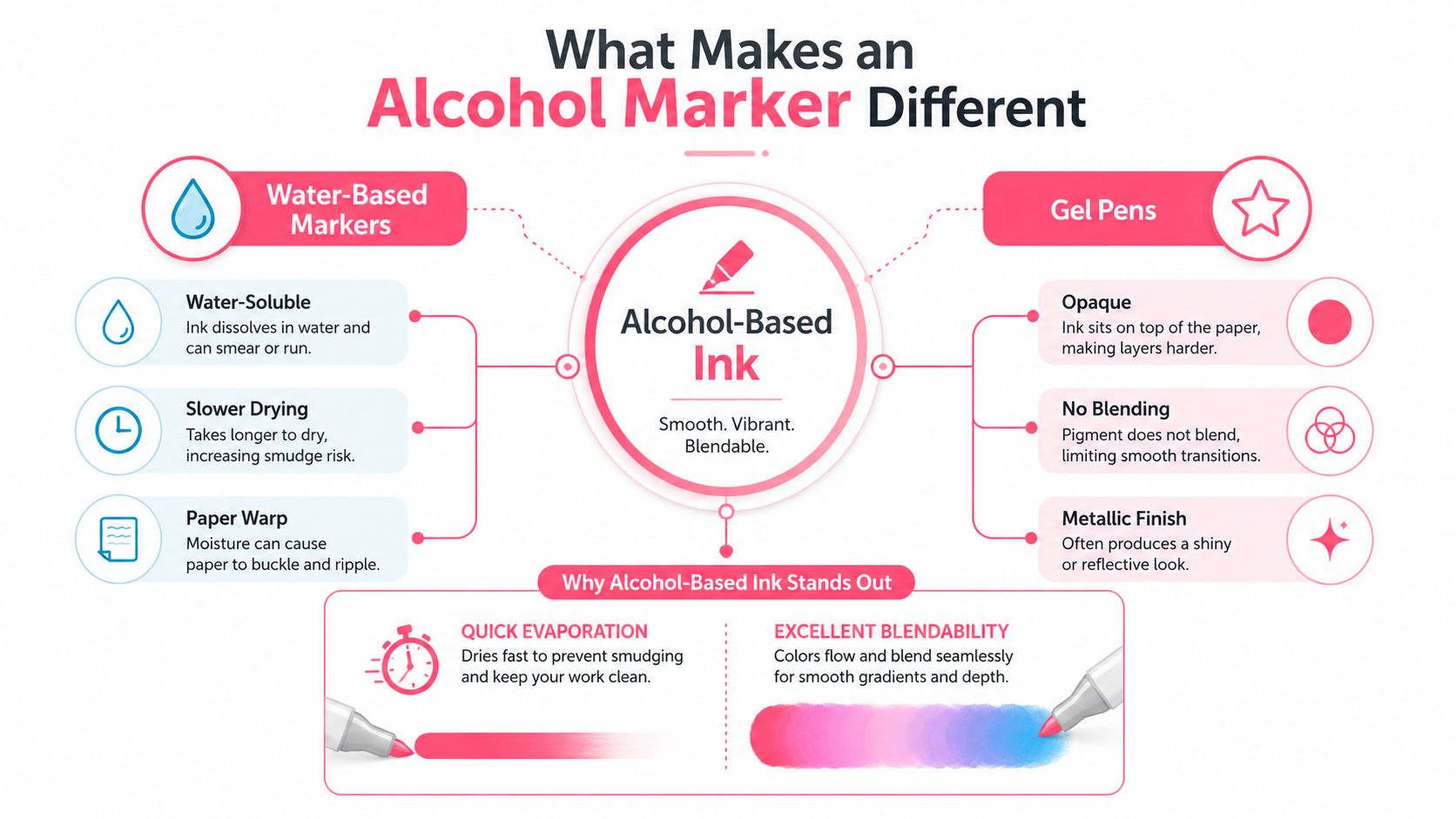
Water-based markers behave more politely on thin paper, but they usually don't give the same smooth blend. Gel pens can look beautiful for highlights and metallic accents, yet they're opaque, not built for broad blending, and they feel like a different tool entirely. That's why alcohol markers aren't interchangeable colored pens, they're a distinct medium with a real learning curve.
What that means in a coloring book
The practical upside is control. If you want a soft sky, a shaded sleeve, or skin tones that don't look flat, alcohol markers can do the job quickly when the paper can handle them. The practical downside is equally direct, because thin coloring-book paper can soak through, and the smell can be noticeable in a small room.
Practical rule: treat alcohol markers like a layering medium, not a coloring-in-one-pass tool. The first stroke is only the beginning.
That is why color range, ink flow, and paper compatibility matter more than a pretty cap design. Two sets at the same price can feel completely different once you start pushing them across a page.
Comparing the Top Alcohol Marker Brands
A lot of marker shopping gets lost in color counts, but the hand tells a different story. One set may look huge on a product page and still feel streaky on a page of floral line art, while another set with fewer shades can make blending feel effortless. The comparison starts when the ink hits coloring-book paper, because that is where nib feel, flow, bleed-through, and long-term cost show up fast.
Alcohol Marker Brand Comparison at a Glance
| Brand | What It Feels Like in Use | Nib Setup | Approx. Color Count | Refillable | Price Tier |
|---|---|---|---|---|---|
| Copic | The premium benchmark, smooth flow, strong long-term logic | Brush tip plus medium broad nib | 358 colors across the current system, with the Sketch line widely noted at 357 colors art-is-fun.com | Yes, with replaceable nibs | Premium |
| Ohuhu | Value-heavy, easy to recommend for everyday coloring | Commonly brush and chisel in many sets | Large family of sets | Some current lines support refills | Budget to midrange |
| Prismacolor | Familiar classic with a long-standing dual-tip appeal | Dual-tip format | Broad assortment | Less lifecycle flexibility than refill systems | Midrange |
| Spectrum Noir | Solid midrange pick for colorers who want balance | Dual-tip and brush-oriented options | Large family of sets | Some support depending on line | Midrange |
| Winsor & Newton | Smooth, even coverage with a distinct hand feel | Often bullet and chisel or brush-focused | Large family of sets | No | Midrange to premium |
Copic stays at the top of most professional conversations because the system is built around refills and replaceable nibs, not just a one-time purchase. That matters if you color hard and often, because the cost per use changes once you can keep the barrel and refresh the parts. Copic Sketch markers use a brush tip plus a medium broad nib, which is a practical combo for both detail and fill work sarahrenaeclark.com.
Ohuhu is the brand I'd put in front of most beginners who want serious color without immediate sticker shock. The sets are broad, the flow is usually friendly, and the value story is strong when you're buying a larger pack. Prismacolor still appeals to people who like a classic dual-tip feel, while Spectrum Noir often lands in that workable middle zone where a set feels friendly without demanding premium money.
Winsor & Newton has a different personality. Their Promarkers are known for a smooth, even look on the page, and that flatter coverage can help on flat fills and bold shapes. The drawback is direct, they aren't refillable, so the ownership story is shorter than with a system like Copic.
If you care about keeping the same colors alive for years, refillability beats a bigger starter box. If you just want to finish a stack of coloring books without thinking about maintenance, a good set with strong ink flow can be the smarter buy.
For buyers comparing Amazon sets, the useful question isn't which brand is famous. It's which one gives you the nib feel, palette range, and maintenance profile you will use. If you want a faster side-by-side check, our side-by-side marker comparison tool can help you sort the trade-offs before you buy: our side-by-side marker comparison tool.
The differences show up quickly on the page. A set with a smooth brush nib and consistent ink release can blend skin tones without fighting the paper, while a set that looks generous on the swatch chart may still struggle on thin coloring-book stock. That is why some artists keep a premium set for finished pages and a cheaper set for practice, then choose based on which paper they use most.
Budget matters too, but so does the cost of staying with a set. A refillable marker can take more abuse over time if you like to revisit the same colors again and again, while a non-refillable set may make more sense if you color in bursts and replace colors less often. The right brand is the one that matches how often you color, how much you blend, and how forgiving your paper really is.
Nibs and Ink Behavior Explained
The nib is the part that decides whether a marker feels precise, soft, scratchy, or oddly stubborn. A brush tip flexes and glides, a chisel tip fills broad shapes faster, and a bullet tip gives tighter control for smaller spaces. The wrong nib can make a good ink formula feel awkward, so it's worth separating the tip from the brand name in your head.
What each nib does well
Brush tips shine on coloring-book pages because they can move from a tight corner to a larger petal without changing tools. They're the nib I'd reach for on manga hair, curved fabric folds, and anything that needs a feathered edge. Chisel tips are useful for bigger fills, but they can feel too blunt on delicate line art.
Bullet tips are the control nib. They're not the fastest for huge areas, yet they're excellent for tiny sections, outlines, and speed-line details in comic work. A bullet nib won't give you the same painterly sweep as a brush nib, but it's very predictable.
Why one set blends better than another
Ink flow matters as much as nib shape. Expert alcohol-marker teaching leans on a simple layering rule, lay down the lighter tone first, then build midtones, then shadows, because alcohol ink doesn't erase cleanly once it's down dessindigo.com. That only works well when the marker releases ink consistently and the shade range gives you enough steps to move from light to dark without a harsh jump.
A marker with great nib feel but weak flow can streak under pressure. A set with huge color count but uneven output can also frustrate you, because it forces extra passes where one smooth pass should have been enough. The sweet spot is a nib that suits your hand plus ink that stays even across the stroke.
Good blending starts before color choice. If the nib fights you, the blend usually fails before you notice why.
That's why brush-heavy sets tend to win for coloring books, while chisel-heavy sets can make large fills faster but less graceful. For adult coloring pages with small cells and ornate borders, nib control usually matters more than raw speed.
Paper Compatibility and Bleed Control
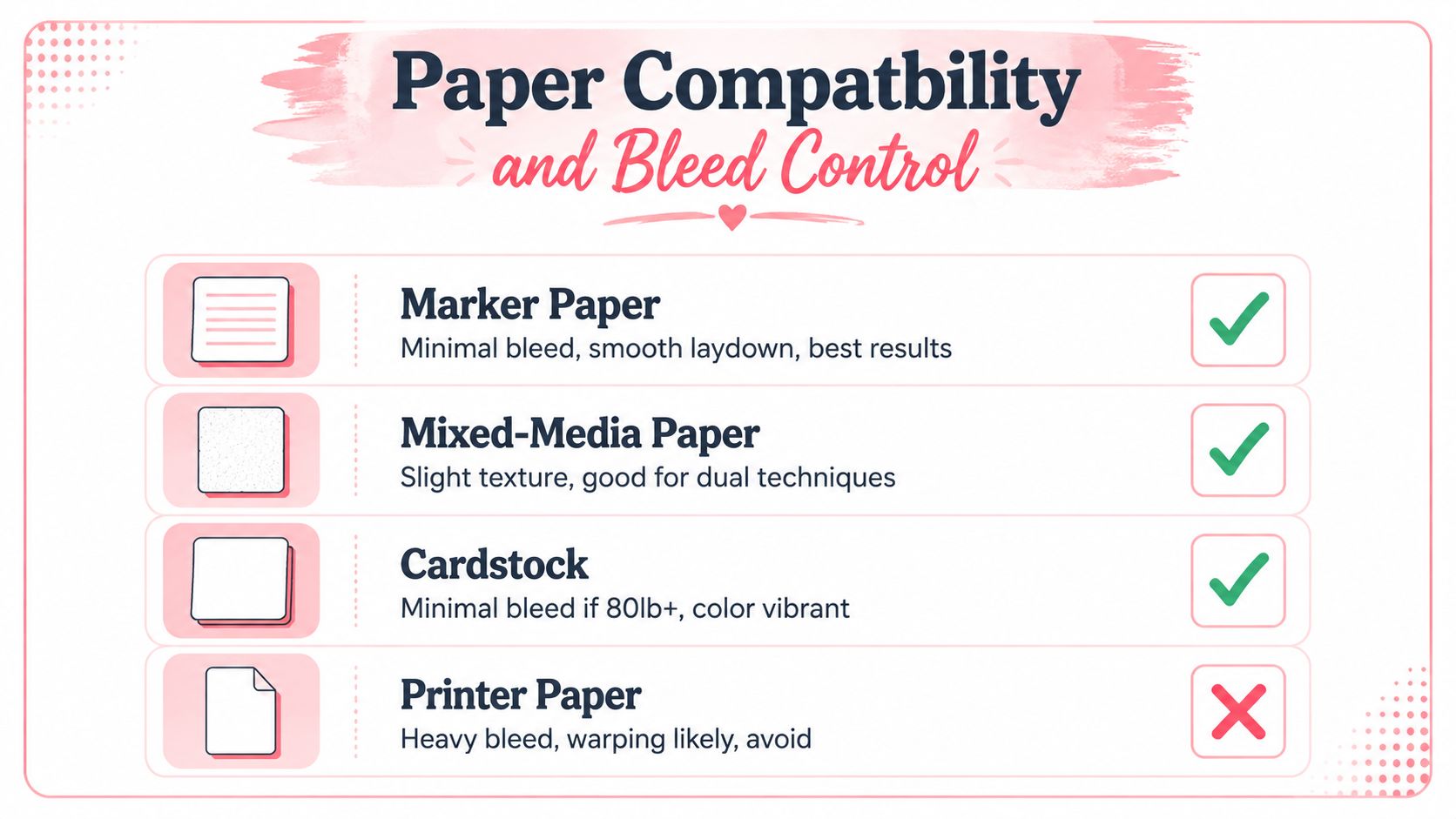
Paper decides more marker behavior than most buyers expect. Marker paper, mixed-media paper, cardstock, and thin coloring-book paper all react differently once the ink hits them, and the same set can look polished on one sheet and messy on another. Alcohol ink is especially unforgiving because it moves quickly and can soak through lighter stock.
The paper types that matter most
Marker paper gives the cleanest results because it's built to slow the ink just enough for blending without turning mushy. Mixed-media paper works well if you want a little tooth and still plan to blend with markers. Cardstock can hold up if it's thick enough, though the page still needs testing before you commit to a full spread.
Printer paper is the wrong place to push alcohol markers. It tends to buckle, bleed, and ghost badly, especially if you layer more than once. Thin mass-market coloring-book pages often sit closer to printer paper than to marker paper, which is why a relaxing page can turn into a test of patience.
Simple habits that save pages
A scrap sheet under the page catches bleed-through and protects the sheet below it. Swatching a small corner first tells you how a specific set behaves on that exact book. Brush-tip-heavy sets usually feel safer on delicate line art because you can stay lighter with pressure and avoid flooding tiny spaces.
Use these checks before you commit to a page:
- Test the corner first. You'll see bleed, feathering, or streaking before it ruins the artwork.
- Keep a backing sheet in place. That one habit protects the rest of the book.
- Match the nib to the page. Brush tips help with control, while chisel-heavy sets can overwhelm fragile paper.
- Accept paper limits early. Some books are too thin for heavy layering.
A lot of frustration blamed on the marker brand is really a paper problem. The marker didn't suddenly get worse, the page just couldn't hold the ink.
Which Set Fits Your Coloring Style
The right set depends on the page in front of you and the way you work. Someone filling simple florals in a cozy adult coloring book needs a different setup than someone shading anime hair or building clothing folds. The best choice is the one that fits your actual session, not the label on the box.
Beginners and casual colorers
If you're new, start with Ohuhu or Spectrum Noir. Both give you a practical way to learn layering without spending premium money on a hobby you're still testing. A beginner usually needs range and forgiveness before refillability starts to matter.
A starter pack gives you room to learn nib control and blending before you commit to a more expensive system you may not use yet.
Hobby colorists and adult coloring books
If your pages are mostly florals, mandalas, and cozy line art, a brush-tip-forward midrange set makes more sense than chasing prestige. Ohuhu is the easy value pick here, while Spectrum Noir often suits people who want a little more polish in the hand. Adult colorists usually care most about how a page feels while they're relaxing, not whether the barrel is iconic.
This is also where paper behavior matters. On thin coloring-book stock, a set that lays down ink cleanly and does not flood tiny spaces will feel better than a flashy palette that looks good only in the tray.
Manga and comic artists
For manga, comics, and skin tones, Copic remains the system that many artists still treat as the benchmark. The refillable structure and nib replacement keep it useful for heavy use, and the 358-color ecosystem gives you room to build smoother transitions across hair, clothing, and skin. If you color fast and often, consistency starts to matter more than a bargain set art-is-fun.com.
That matters the moment the ink hits paper. A set with predictable flow is easier to control on faces, panels, and tight line work, while a cheaper set can save money up front and still cost more in frustration if the colors skip or the palette runs out of useful steps. For side-by-side palette planning, the ColorBestie Decotime to Ohuhu converter can help you compare marker codes before you start a page.
Serious illustrators and long-term users
If you know you'll keep using alcohol markers for years, a refillable system makes more sense than buying disposable sets repeatedly. Copic is still the clearest example, especially because the long-term ownership story is built into the line sarahrenaeclark.com.
For people who want to preview a palette before opening the markers, ColorBestie can generate a full-color preview and marker-code suggestions for popular alcohol marker brands. That kind of planning helps you decide whether a palette can carry a full weekend of coloring or only looks good in the box.
The wrong marker set doesn't always look bad. It just slows you down in the exact places you wanted coloring to feel easy.
Testing a New Set and Building Layered Color
A new marker set should prove itself on a scrap sheet before it reaches a favorite page. I want to see how the ink behaves on real coloring-book stock, not just how the caps look in the box. A quick test catches loose caps, dry first strokes, and uneven flow before a session gets derailed. I run that same check on every brand that lands on my desk.
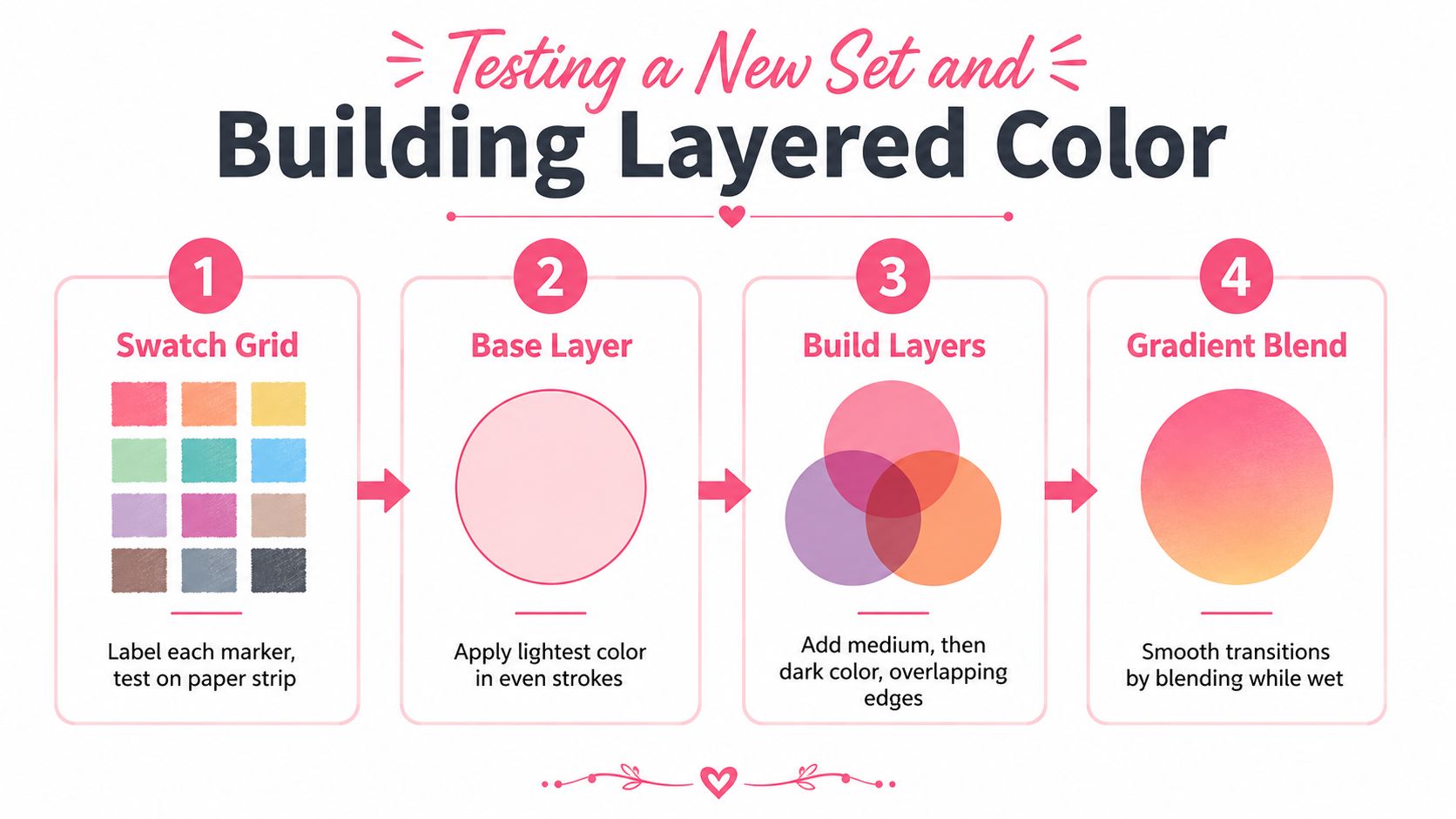
A fast test routine
Start with a swatch grid and label every marker so you can see the family structure, not just the cap. That matters if you are comparing a new set against one you already use, or if you are trying to match a palette through the Ohuhu-to-deco palette converter before you commit to a page. Then make one clean stroke from each nib and watch for gaps, squeaks, or a dry start. If a cap feels loose or the first stroke skips badly, I set that marker aside immediately.
The layering rule stays simple even when the result looks complex. Lay in the lightest color first, add the medium tone, then bring in the dark tone while the earlier ink is still workable. Alcohol ink blends best before it dries, so the order of those passes matters as much as the colors themselves.
Building a gradient that stays clean
A gradient holds together when each pass adds depth without flooding the paper. Heavy pressure on the first layer leaves less room for later tones, and that shows up fast on thin coloring-book sheets. A lighter first pass keeps the page open for shadows and transition colors.
If a marker starts to feel dry, do not assume the set is finished. Check the cap fit, store it properly, and test it again after it has had time to settle. A dead nib and a temporary flow problem can look similar at first glance, especially when you are working quickly.
Best habit: swatch first, layer second, judge third. Most marker disappointment comes from skipping that order.
The payoff shows up on the page. Once you know how a set behaves on your paper, you stop guessing, waste less ink, and get cleaner blends across faces, clothing, and background fills.
Planning Palettes Before You Color
A lot of wasted ink happens before the marker ever opens. People choose colors one by one, then wonder why the page feels uneven or why a skin tone sits apart from the background. A better workflow is to preview the palette first, then translate that plan into the marker numbers you already own or plan to buy.
Digital planning before paper
A palette preview tool lets you test mood, lighting, and color balance on a reference image before you touch the page. That helps when you are deciding whether a scene needs warm shadows, cool highlights, or a more muted background. It also helps you avoid buying three near-identical colors just because they looked good in a row.
A digital preview matters with alcohol markers because the medium is permanent once it hits the paper. If the color story is off, you are not erasing it later. Planning once on screen can save a stack of test swatches in real ink, and it gives you a cleaner read on how the set will behave on coloring-book stock.
Translating ideas into marker sets
The practical move is to map the preview back to real brand codes. Copic, Ohuhu, Prismacolor, and Spectrum Noir all organize color families in ways that make this translation workable. You can build a small starter combo, then keep expanding it with shades that support the same lighting logic.
For that kind of palette building, the palette generator tool can help turn a digital mood into a usable marker plan with marker code suggestions for popular alcohol marker brands. That is useful when you are comparing sets instead of buying blindly and hoping the colors work together.
A palette that looks balanced on screen usually needs fewer corrections on paper. That is the real win.
If you color in short sessions, this kind of planning also keeps decision fatigue low. You sit down with a direction already chosen, and the page starts faster.
Care, Refills, and Long-Term Value
The cheapest marker set can become expensive if you burn through it and replace the whole box. The pricier set can look expensive up front and still make more sense over time if you can refill the ink and replace the nibs. That's the ownership question behind every alcohol marker purchase.
What to maintain
Store markers horizontally if the brand recommends it, keep the caps clean, and close them firmly after every session. If a nib starts to dry out, check the cap seal before assuming the marker is done. Refillable systems have the clearest long-term advantage because you can keep the barrel, refresh the ink, and swap worn parts instead of rebuying the whole tool.
Care checklist
- Close caps fully. A loose cap ruins the marker faster than most people expect.
- Swatch problem colors early. You'll spot a drying nib before it affects a full page.
- Replace nibs when they roughen. A tired nib changes the stroke even if the ink is fine.
- Use refillable systems for heavy use. The ownership math gets better when you color often.
Disposables still have a place. If you color occasionally or like a grab-and-go set for travel, convenience can matter more than a refill schedule. But if you're filling page after page, the long-term value usually shifts toward systems built for maintenance.
If you want a calmer way to choose your next set, use ColorBestie to preview palettes, compare marker families, and see how a scheme behaves before you commit ink to paper. It's a practical way to match your ideas to the alcohol markers you already own or the set you're about to buy.