The best colored pencil brand isn't the same for every artist. A pencil that feels perfect for tiny botanical details may frustrate someone who wants broad, buttery gradients, while a beautifully soft core can become expensive if it breaks often or wears down quickly. The useful comparison is less about prestige and more about core behavior, layering, lightfastness, blending, palette design, budget, paper, and mixed-media compatibility.
This guide compares ten colored pencil brands through those real drawing decisions. You'll find professional oil-based pencils, soft wax lines, archival-focused ranges, water-soluble options, curated journaling palettes, and budget-friendly choices with practical replacement advantages. Prismacolor has roots reaching back to 1938, while Copic, although primarily a marker brand, entered the professional colored-media story in 1987 with a designer-focused system and 71 colors, as described in the brands' official histories (Prismacolor history, Copic history).
Before buying a large set, test a few individual colors on your intended paper. Make a swatch card, layer light over dark, try a sharp point, test a blender or solvent if relevant, and note how much pressure you need. That small experiment tells you more than a popularity ranking.
1. Faber-Castell Polychromos
Faber-Castell Polychromos is the dependable choice when point control and clean layering matter more than instant softness. Its oil-based core feels firm but not brittle, allowing you to build delicate layers without quickly losing the tip. That makes it especially useful for hair, eyelashes, linework, botanical edges, and textured surfaces where a blunt pencil would flatten the drawing.
The range is built as a 120-color system, with 3.8 mm cores that hold a sharp point well. Many colors offer strong lightfastness, though you should still check the rating of each pencil before using it for work intended for display. The oil-based formulation also tends to avoid the wax bloom associated with very soft wax pencils, and the surface remains relatively easy to adjust with an eraser or careful lifting.
Where Polychromos earns its place
Polychromos works particularly well over alcohol-marker underpainting. The stable, harder core lets you add controlled shadows, facial features, folds, and crisp accents without dragging the marker layer around. It's also a sensible companion to marker systems such as Copic or Ohuhu when you want the pencil to supply detail rather than cover the entire drawing.
- Best for detail: Sharp points stay useful through fine rendering.
- Best for layering: Thin applications build gradually and resist muddying.
- Best mixed-media use: Pair it with alcohol markers for controlled finishing work.
- Main drawback: Premium pricing can make a full set difficult to justify at the start.
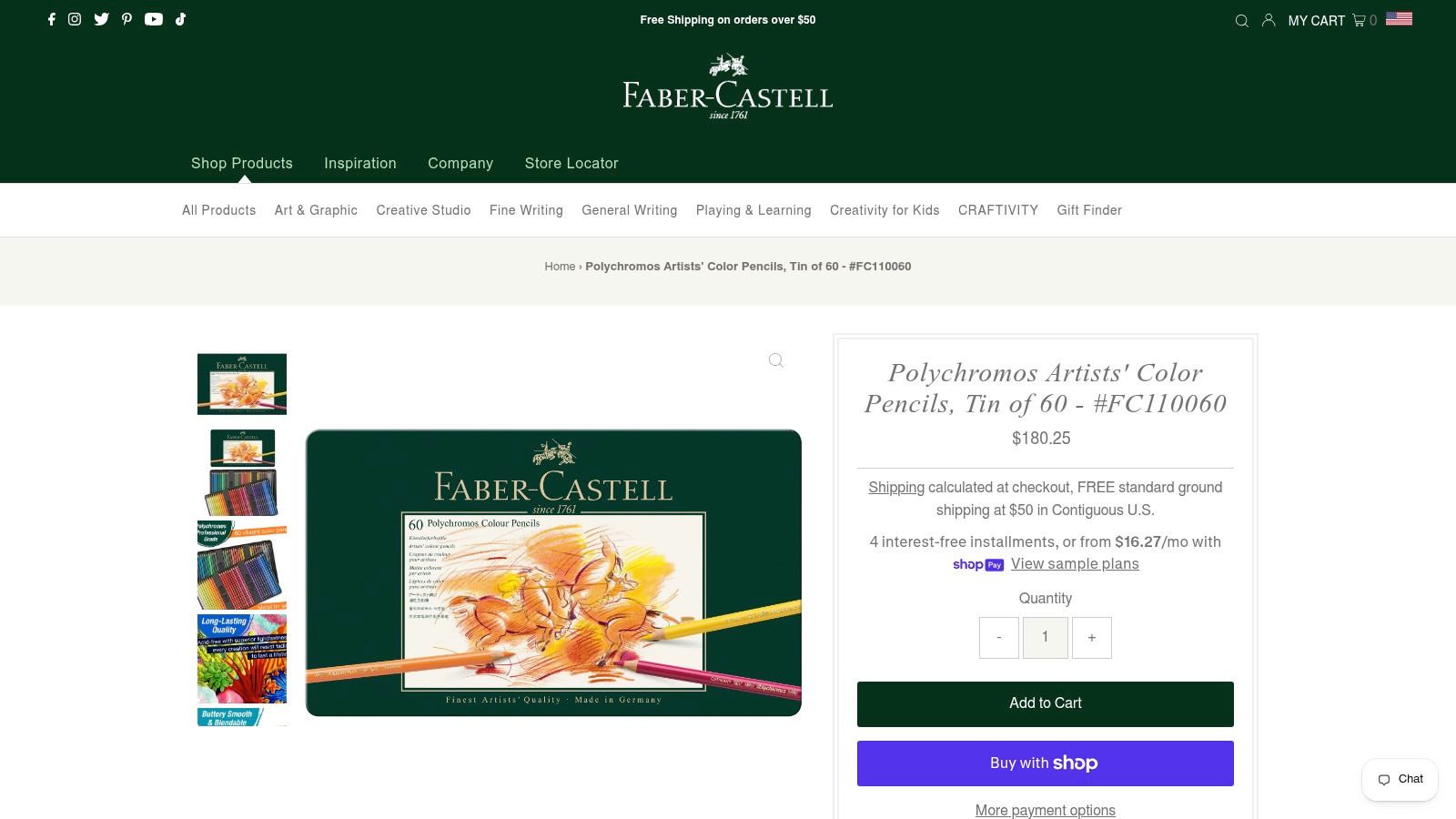
A US tin of 60 is listed at $180.25 on the manufacturer's product page (Faber-Castell Polychromos product details). Sets can also become unavailable, so open-stock purchasing is worth considering.
Use a color palette generator to plan combinations before choosing individual pencils, but let physical swatches decide whether the colors suit your paper.
2. Caran d'Ache Luminance 6901
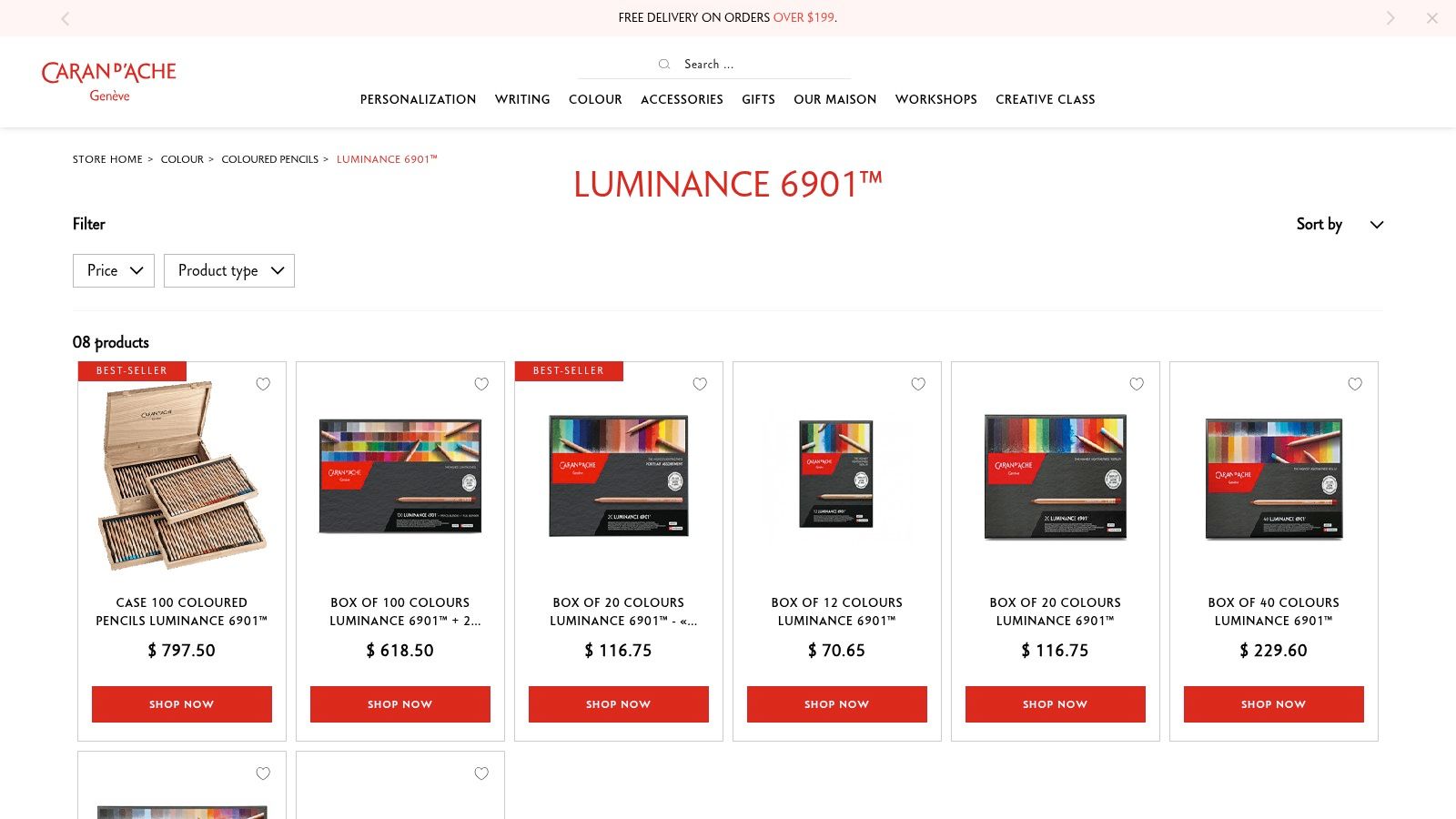
Choose Caran d'Ache Luminance 6901 when the drawing depends on creamy application and opaque blending. Its wax-based core moves smoothly across the page, fills the tooth efficiently, and burnishes without demanding heavy pressure. That behavior suits portraits, pale neutrals, soft temperature shifts, and broad transitions where a harder pencil may leave visible strokes.
Lightfastness is a central part of the range's design, with the ASTM D6901 standard used in its positioning. Treat that as a color-selection issue, not an automatic archival guarantee. Paper, display conditions, fixatives, and the individual pigment still affect the finished work, so check the information for each color.
Luminance is especially useful on toned paper, where its opacity can bring lights forward and soften edges cleanly. It also handles skin, stone, fabric, and atmospheric passages well. The trade-off is a more painterly mark than Polychromos, with less emphasis on maintaining a needle-sharp point for extended detail work.
Use it for smooth gradients, opaque coverage, portrait rendering, and burnishing. Expect a soft, rich layer that covers quickly. Plan sharpening carefully because the core is soft, and check local open-stock availability before committing to a large palette.
The US 100-color case is listed at $797.50 on the official Luminance 6901 product page. That cost makes sampling practical: start with colors that fit current projects, then replace exhausted pencils instead of buying the full range immediately. A theme preview tool can suggest mood-based groupings, but physical swatches should determine the final selection.
3. Derwent Lightfast
Choose Derwent Lightfast when long-term color stability determines the purchase. Its oil-based core feels creamy and lays down an opaque mark, while the range is built around museum-grade lightfastness. That combination suits commissions, exhibition pieces, and drawings intended for prolonged display, provided you check the rating of every color rather than treating the entire line as identical.
The 4 mm cores support both broad coverage and controlled marks. On toned paper, their opacity helps lights stay visible. On white paper, the smooth laydown builds layered passages with less pressure than a harder pencil requires. The surface and the subject therefore matter as much as the brand: Lightfast is most useful when you need solid coverage without giving up measured detail.
Solvent adds another option to the workflow. Apply it selectively with a brush to spread the oil-based pigment into a fluid underlayer, then return with dry pencil. This works well for backgrounds, large shadow masses, and other broad passages that would take too long to fill through repeated strokes alone. The pencil still supports gradual layering and pressure changes after the solvent dries.
A smaller palette than some professional systems can limit color matching, and online stock may fluctuate. If a project depends on a specific hue, check availability before committing. Replacement planning matters too, because finding one exhausted pencil may take more preparation than buying from a widely stocked range.
Use Lightfast for archival portraits, wildlife, still life, and display work. Toned paper makes its opaque lights especially useful. Record the colors used in permanent pieces, rather than relying only on the barrel label.
Derwent lists the specifications and current range on its Lightfast product page.
4. Prismacolor Premier Soft Core
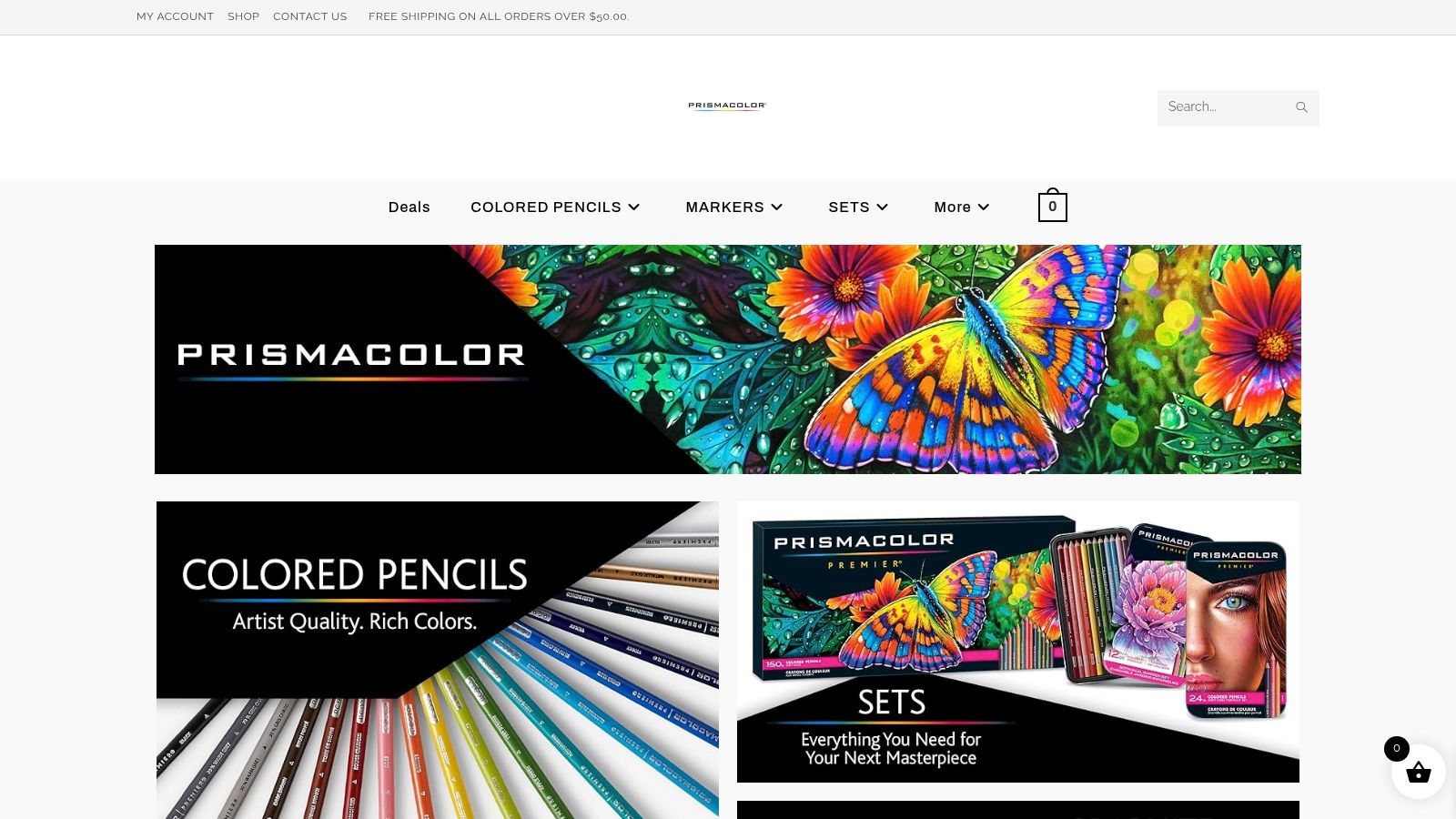
Prismacolor Premier Soft Core earns its place through fast blending, saturated color, and smooth burnishing, not point retention. The soft wax core lays down a dense mark with little pressure, making it effective for gradients, decorative coloring, expressive illustration, and polished surfaces. Artists who rely on fine edges or repeated sharpening will face a different trade-off.
The Premier range includes 150 colors. Its related Verithin and Col-Erase lines can support a mixed-media workflow, pairing soft coverage with sharper preliminary drawing or detail work. That combination is useful when one pencil must handle both broad passages and controlled accents.
Choose it for coverage, plan for replacements
The core is vulnerable to drops, loose storage, and dull or poorly aligned sharpeners. Its point wears faster than a firm oil-based pencil, so detail work demands frequent sharpening and consumes more material. Sharpen gradually with a reliable blade, and store the pencils securely.
- Best for: Smooth gradients, burnishing, bold coverage, and relaxed coloring.
- Budget advantage: Retail availability and promotions can make sets approachable.
- Display work: Check the manufacturer's lightfastness charts because performance varies by color.
- Replacement strategy: Record frequently used shades and buy backups before a favorite pencil is exhausted.
Prismacolor also fits marker-centered workflows. The marker comparison tool can help organize combinations when matching alcohol-marker palettes with pencil colors. Its main limitation is softness, so choose it when blending speed and rich coverage matter more than a durable needle point.
5. Holbein Artists' Colored Pencils
Holbein Artists' Colored Pencils make a strong case for choosing by core behavior, not brand prestige. Their oil-based core lays down high-chroma color with opaque, silky coverage. The feel sits between a very hard pencil and an especially soft one, giving portrait artists and illustrators smooth application without requiring an exhausting number of layers on darker paper.
The range includes 150 colors, with portrait tones, pastels, and neutrals that support gradual transitions. That palette is most useful when your subjects depend on subtle value shifts. Bright primaries are available, but the broader advantage is having ready-made intermediate colors for skin, fabric, and muted backgrounds.
Match the palette to the work
Holbein suits drawings where coverage and color presence matter more than an exceptionally sharp point. Pale colors should be tested on the intended paper, because their effect changes with the paper's tooth and value. On a smoother, darker ground, they can provide the opacity that a harder pencil may struggle to achieve.
Presentation is part of the appeal. Larger sets may come in wooden boxes that protect the pencils and organize a substantial studio palette. The box should not drive the decision, though. A smaller selection built around your recurring subjects is more useful than a large set containing shades you rarely touch.
Replacement planning deserves attention. Availability can be more limited in the United States, where the pencils are generally obtained through authorized retailers and distributors. Before starting a commission, check whether your main colors are sold individually and can be reordered without difficulty.
- Choose Holbein for: Opaque portraits, vivid illustration, and darker paper.
- Expect: Smooth coverage and strong chroma.
- Check first: Regional pricing, open-stock access, and paper compatibility.
- Skip the large set when: You are buying mainly for the presentation box.
Holbein provides product details on its official Artists' Colored Pencil page. A focused swatch test will show whether the pale shades, blending behavior, and replacement options fit your workflow.
6. Koh-I-Noor Polycolor
Choose Koh-I-Noor Polycolor when point control matters more than a luxurious feel. Its oil-based handling produces crisp marks, holds a point through hatching and architectural details, and layers cleanly for illustration and small studies. The core is firm enough for precise work without becoming excessively scratchy, though artists who prefer a soft, immediately opaque laydown may find it less satisfying.
A practical buying route is to start small. Polycolor comes in multiple set sizes and open stock, with a blender pencil available. Build a working palette around the colors you use most, then replace exhausted pencils individually. That approach suits students, sketchers, and working artists who would rather spend on usable replacements than store rarely used shades.
Match the pencil to the decision
For detailed drawings, the firm core keeps edges controlled and makes repeated layering predictable. On smooth paper, it can feel relatively hard and show more of the surface. Heavier texture may require extra passes to fill the tooth, so test a few colors on the paper you use before judging coverage or blending.
The trade-off appears in color selection and documentation. Portrait artists may miss some ultra-pale tones and specialty neutrals found in premium ranges. Lightfastness information is also less prominent and centralized online. Personal sketches can tolerate that uncertainty, while sellable or archival work calls for checking individual colors before committing to a finished piece.
Practical rule: Test the colors you rely on, then confirm that those pencils can be reordered.
- Best budget use: Detailed studies, line-focused illustration, and practice work.
- Best replacement strategy: Buy a compact palette first, then add open-stock colors.
- Useful companion: A dedicated blender pencil for smoothing completed passages.
- Main compromise: More research for lightfastness and fewer specialized portrait hues.
The Koh-I-Noor Polycolor range lists current product and availability information. Compare the pencil on both smooth and textured paper, since its firm core responds noticeably to surface tooth.
7. Lyra Rembrandt Polycolor
Lyra Rembrandt Polycolor suits artists who need oil-based point control and smooth laydown without moving into the highest professional price tiers. Its balance works for illustration, portrait studies, and toned-paper drawings, where one pencil may need to handle delicate outlines, value building, and moderately rich modeling.
The 4 mm cores support a stable point, while sets commonly run from 12 to 72 colors. That range makes replacement planning practical. Start with a smaller selection, record which colors vanish first, then expand through a larger set or open-stock purchases instead of buying shades that rarely leave the tin.
Polycolor's core holds an edge for controlled marks, yet it does not feel as dry as some harder pencils. That middle behavior helps when a drawing shifts between fine details and broader layered passages. On toned paper, moderate pressure can establish values cleanly before lighter colors are added for highlights.
Paper choice still matters. A smooth surface shows the pencil's control and allows cleaner edges. More textured paper may need additional layers to fill the tooth, so test the colors and pressure you use rather than judging coverage from the packaging.
Let workflow decide the purchase
The main compromises are documentation and regional availability. English product information can be limited, and retailers may not carry every set or individual color consistently. Keep a swatch sheet with your own notes on lightfastness, layering, and replacement priorities. That record becomes more useful than relying on a changing product listing.
- Choose it for: A versatile mid-range oil-based experience.
- Good subjects: Portraits, line-focused illustration, and toned-surface studies.
- Buying approach: Start small, then replace frequently used colors individually.
- Potential frustration: Regional stock and sparse English documentation.
The Lyra Rembrandt Polycolor set information provides a useful product reference. Test pressure, layering, and erasing on your usual paper before committing to a full set.
8. Tombow Irojiten
Choose Tombow Irojiten when the drawing depends more on palette control than maximum coverage. Instead of one large assortment, the pencils come in curated color volumes. That format suits artists who plan around a mood or subject, such as botanical sketches, planners, journaling, lettering accents, and color-focused studies.
The medium-wax core holds a reasonably crisp point. It handles small spaces, outlines, hatching, and restrained shading without feeling as soft as a burnishing pencil. That point retention also helps when a page requires repeated detail work. Use lighter layers for quiet color, then build pressure selectively where a marker or brush pen needs a firmer pencil edge beside it.
Match the volume to the drawing
Irojiten works best when each volume supports a clear palette decision. A coordinated group of greens, muted reds, or soft neutrals can be more useful than a mixed selection of unrelated colors. Swatching the volumes together reveals which colors can share a page and which gaps may require another set or a different brand.
The system has practical limits. Heavy burnishing and thick, polished coverage are not its strongest uses, so artists seeking dense wax layers may prefer Prismacolor Premier or Luminance. A very large specialty palette can also be harder to assemble from the volume structure. For mixed-media pages, however, the pencils sit comfortably beside brush pens and markers, adding texture and controlled accents without overpowering them.
Replacement planning matters too. Buy around the colors that recur in your work, and keep a swatch record before expanding into another volume. That approach makes the set structure easier to manage than buying by prestige alone.
Tombow's Irojiten product page shows the current presentation and palette approach. Test the pencils on your usual paper, especially if you need saturated coverage or frequent layering.
9. STAEDTLER karat aquarell
STAEDTLER karat aquarell is for artists who don't want to choose between drawing and watercolor effects. Used dry, it behaves like a colored pencil for outlines, hatching, and layered detail. Add water with a brush and the pigment disperses into a wash, giving you a flexible underpainting or a softer transition before you return with dry pencil.
That dual behavior makes it useful for travel journals, mixed-media studies, botanical work, and marker-adjacent workflows. You can sketch structure with the pencil, activate selected areas, let the paper dry, and then sharpen the form with dry applications. It's a more deliberate process than burnishing a wax pencil, but it opens techniques that ordinary cores can't provide.
What it won't replace
Karat aquarell isn't designed for heavy dry burnishing. If your finished work depends on dense, polished wax coverage, a water-soluble pencil will feel less satisfying. Water control also becomes part of the result. Too much liquid can disturb the paper or spread the pigment beyond the edge, especially on a delicate sketchbook page.
The line is available in metal-box sets up to 48 colors, according to the STAEDTLER product information. Lightfastness labeling is less prominent online, so check color-specific charts when permanence matters.
- Choose it for: Dry and wet techniques in the same drawing.
- Use it as: A wash, underpainting, detail pencil, or travel-friendly hybrid.
- Avoid expecting: The dense burnishing behavior of soft wax or oil-based artist pencils.
- Test first: Water, paper, and lifting behavior on a scrap sheet.
10. Blick Studio Artists' Colored Pencils
Prestige is not the main reason to choose Blick Studio Artists' Colored Pencils. Their practical strengths are practice, classroom work, travel kits, and economical palette building. The wax-based core provides smooth coverage for studies and everyday coloring, while open-stock availability lets you replace individual workhorse colors instead of buying another full set.
Blick offers sets up to 72 colors and describes the line as a house-brand artist pencil developed with input from colored-pencil educators (Blick Studio product information). That makes it a useful step above a basic student line for artists who want more pigment and control without committing to a premium system.
Match the core to the task
The core is softer than oil-based pencils such as Polychromos. It covers broad areas comfortably, but points wear faster, sharpening becomes more frequent, and fine detail takes more planning. Artists who build drawings through many layers may also notice that the smaller palette offers fewer specialty colors for nuanced portrait or botanical work.
For mixed-media studies, these pencils fit best where predictable replacement matters more than maximum permanence or an unusually large color range. Start with the colors you use most, then add individual pencils as your projects reveal gaps.
- Best for: Learning, studies, travel, and gradual palette building.
- Replacement advantage: Open stock reduces the need to rebuy complete sets.
- Core trade-off: Softer points mean more sharpening and greater pencil use.
- Best buying method: Buy frequent-use colors first, then add singles.
- Use another line when: Fine detail, archival permanence, or specialty hues take priority.
A useful cost comparison includes more than the purchase price. Breakage, sharpening waste, and duplicate colors can change the value of a set over time. Reviews often emphasize pigment, layering, and blendability while giving less attention to that total cost of ownership, a distinction also discussed in Wirecutter's colored pencil review.
Top 10 Colored Pencil Brands Comparison
| Brand | Core features | Quality & reputation (★ / 🏆) | Price & value (💰) | Best for / Audience (👥) | Unique strengths (✨) |
|---|---|---|---|---|---|
| Faber‑Castell Polychromos | Oil‑based 3.8 mm cores; 120 colours; low wax bloom | ★★★★☆ 🏆 Consistent pro performance | 💰 High (professional) | 👥 Pro illustrators & mixed‑media users | ✨ Hard creamy cores, crisp detail, marker‑friendly |
| Caran d'Ache Luminance 6901 | Wax‑based buttery cores; ASTM D6901 lightfast focus; portrait neutrals | ★★★★★ 🏆 Museum‑grade lightfastness | 💰 Very high (premium/archival) | 👥 Portrait & archival artists | ✨ Exceptional permanence; superb blending & burnish |
| Derwent Lightfast | Oil‑based; 100% lightfast line; 4 mm cores | ★★★★★ 🏆 Archival permanence | 💰 High (archival line) | 👥 Archivists & professionals needing longevity | ✨ Solvent‑friendly, strong opacity on toned papers |
| Prismacolor Premier Soft Core | Very soft wax cores; up to 150 colours; wide ecosystem | ★★★★☆ Excellent for blending & burnish | 💰 Mid / often discounted | 👥 Hobbyists & illustrators who love smooth gradients | ✨ Ultra‑creamy laydown; large color range & tutorials |
| Holbein Artists' Colored Pencils | Oil‑based; 150 colours; high chroma & opaque laydown | ★★★★★ 🏆 Professional coverage & chroma | 💰 High (premium) | 👥 Professional illustrators & portraitists | ✨ Silky application; excellent on dark/toned grounds |
| Koh‑I‑Noor Polycolor | Oil‑based; crisp points; open‑stock options | ★★★★☆ Reliable detail & point retention | 💰 Affordable / value‑oriented | 👥 Budget‑conscious detail artists | ✨ Strong price‑to‑performance; durable points |
| Lyra Rembrandt Polycolor | Oil‑based 4 mm cores; sets 12–72; balanced palette | ★★★★☆ Solid mid‑range artist grade | 💰 Mid (balanced cost) | 👥 Illustrators needing durable points & versatility | ✨ Holds a point well; good on toned papers |
| Tombow Irojiten | Curated color volumes; medium wax cores; small themed sets | ★★★★☆ Stylish palettes & good point retention | 💰 Mid (specialty volumes) | 👥 Journalers, botanical & planner artists | ✨ Library‑style palettes; pairs well with brush pens |
| STAEDTLER karat aquarell | Water‑soluble cores; metal‑box sets up to 48 | ★★★★☆ Versatile dry/wet performance | 💰 Mid (dual‑use value) | 👥 Mixed‑media artists & underpainters | ✨ Activates to washes; great for underpainting before markers |
| Blick Studio Artists' Colored Pencils | Wax‑based house brand; up to 72 colours; open stock | ★★★☆☆ Decent practice/performance | 💰 Budget (cost‑effective) | 👥 Students, practice pieces, travel kits | ✨ Economical, easy to replace singles and expand palette |
Choose the Pencil That Matches Your Workflow
Choose Faber-Castell Polychromos, Lyra Rembrandt Polycolor, or Koh-I-Noor Polycolor when crisp detail leads the decision. These oil-based lines hold points well and reward controlled layering, hatching, and small marks. Polychromos offers the most established premium feel of the three, Lyra gives a balanced mid-range option, and Koh-I-Noor is attractive when replacement cost and price-to-performance matter.
Choose Prismacolor Premier, Caran d'Ache Luminance 6901, or Holbein Artists' Colored Pencils when creamy blending and opaque coverage are more important than point longevity. Prismacolor is the easygoing choice for smooth gradients and burnishing, Luminance is the archival-focused premium option, and Holbein is compelling for high-chroma coverage and refined portrait colors. Their softness can make them enjoyable, but it also means you should account for sharpening, breakage, and how quickly your most-used colors wear down.
If permanence leads, start with Derwent Lightfast or Caran d'Ache Luminance 6901. Check the lightfastness information for every color you plan to use, keep notes about the paper and materials in the finished piece, and don't assume that a professional label removes the need for good display practices. Archival decisions belong to the complete workflow, not the pencil alone.
For wet techniques, choose STAEDTLER karat aquarell. It gives you dry drawing control and watercolor-style activation in one tool. Choose Tombow Irojiten for curated journaling palettes, botanical details, planners, and mood-led sketchbook work. Choose Blick Studio Artists' Colored Pencils for economical practice, travel, teaching, and easy single-pencil replacement.
Your safest buying strategy is simple. Buy the smallest practical set, create a swatch card, test your intended paper, and try the mixed-media combinations you'll use. If you work over markers, test whether the pencil can add detail without smearing or catching on the marker layer. If you use solvents or water, test drying, lifting, and paper response before starting a finished piece.
ColorBestie can help you preview marker-style color ideas, compare palettes aligned with brands artists use, and explore combinations before buying supplies. Its digital suggestions are useful for planning, but physical swatches still decide how a colored pencil behaves in your hand.
ColorBestie turns black-and-white sketches into marker-style color inspiration, offers palette planning and marker comparison tools, and supports brands artists commonly use, including Prismacolor and Copic. Visit ColorBestie to preview color directions before you commit to a new pencil or marker palette, then test the chosen colors on your actual paper.