You've probably had this moment already. You want a relaxing hobby that isn't another screen, but the idea of setting up a big workspace, pulling out a giant book, and committing to a long session feels like too much.
That's where small coloring books shine. They slip into a tote, fit on a café table, and make coloring feel approachable again. One page can be a quick creative reset on a lunch break, a calm companion on a train ride, or a gentle wind-down before bed.
They also solve a very modern problem. A lot of us want a hobby that feels cozy and low-pressure, not one more project to “optimize.” Small coloring books give you that. You can finish a tiny mushroom, a floral cluster, or a cute animal face in one sitting and get that satisfying sense of progress without clearing your whole evening.
The Rise of the Pocket-Sized Creative Escape
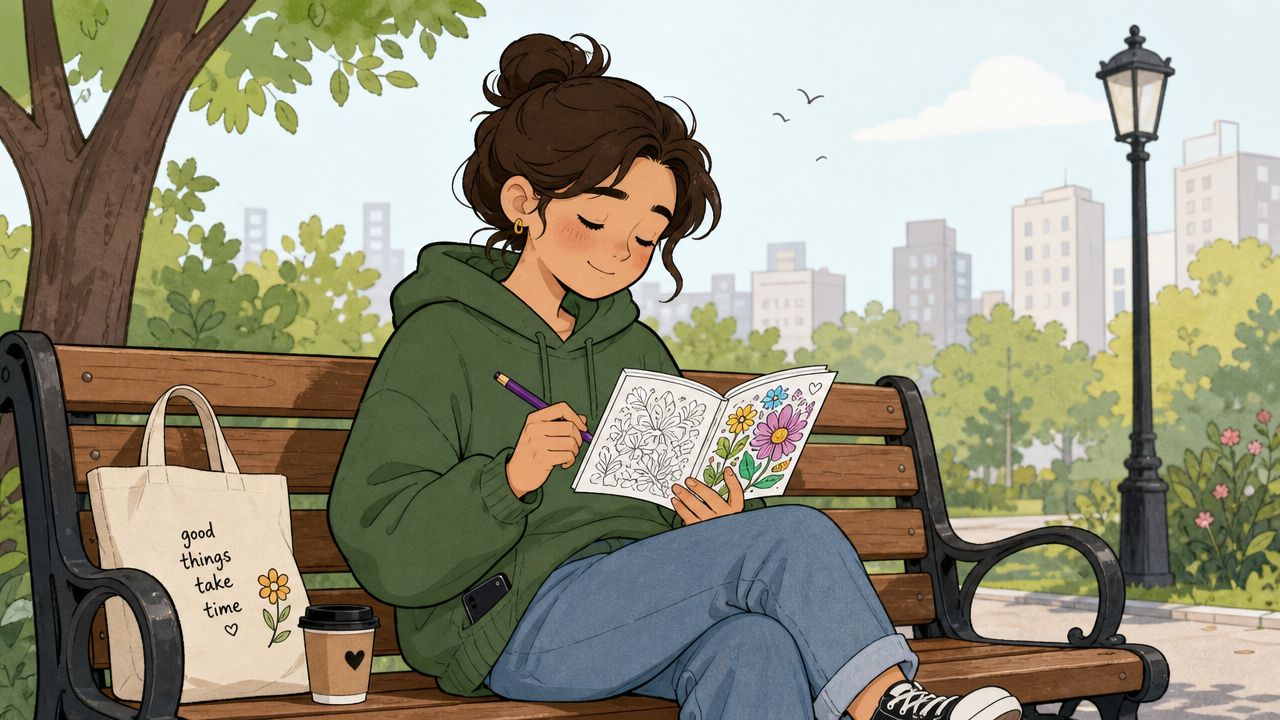
A small coloring book often enters your life in a very ordinary way. You toss it in your bag “just in case,” then end up using it in the doctor's office, while waiting for dinner, or during that half-hour when you're too tired to start something big but still want to make something with your hands.
That ease is a big part of the appeal. Small coloring books don't ask for a dedicated desk, a lamp setup, or a long stretch of free time. They're more like a good notebook. Always ready, easy to reach for, and never intimidating.
There's also a bigger trend behind that feeling. The adult coloring book market was valued at $1.8 billion globally in 2025 and is projected to reach $3.2 billion by 2034, with growth linked to the cozy coloring trend and interest in portable, manageable formats, according to DataIntelo's adult coloring book market report.
Why small feels doable
Large pages can be beautiful, but they can also feel like staring at a blank wall. Small pages feel more like decorating a shelf. You can see the finish line.
That matters when you're new to coloring or coming back after a long break. Finishing even one page builds momentum. You start to learn what color combos you like, which pens behave well, and how much detail you enjoy before your hand gets tired.
Practical rule: If a hobby is easy to start, you're more likely to keep doing it.
Small coloring books also fit a wider range of moods. Some days you want to blend a whole sunset with Copic markers. Other days you want to fill three tiny tulips with a gel pen and call it done. Both count.
A lively niche, not a tiny one
If you've wondered whether these books are just a passing fad, the sales activity says otherwise. In the US small coloring books for kids category, the top-selling ASIN and the next two leading titles each record 10,000 monthly sales, showing strong demand around compact formats, according to ASINsight's small coloring books for kids report.
That doesn't mean every small book is good. It means the format clearly fits how people live now. Portable. Low-pressure. Easy to pick up and put down.
And that's why so many colorists keep one nearby. It's not replacing your full-size books. It's the version you'll use regularly on ordinary days.
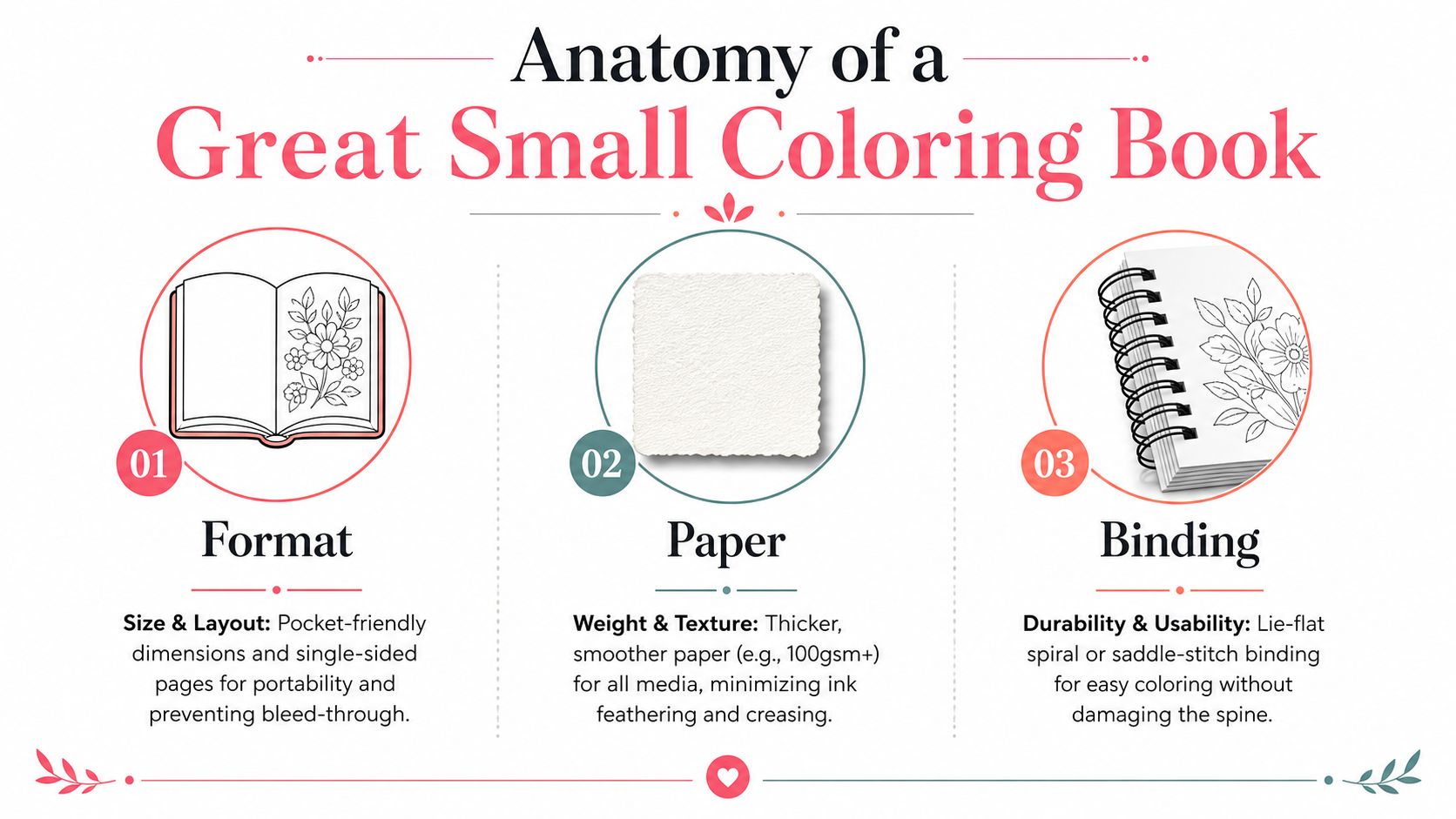
Anatomy of a Great Small Coloring Book
Not all small coloring books are enjoyable to use. Some are delightful little companions. Others fight you on every page with stiff spines, thin paper, or cramped layouts.
The trick is to judge the book like you'd judge a sketchbook. The cover art matters less than the structure. Once you know what to look for, you can spot the good ones fast.
Why size changes the experience
“Small” can mean a few different things. Some books are palm-sized. Others are closer to a compact journal. A tiny book is perfect for travel, but if the drawings are very detailed, the page can feel crowded fast.
Here's a simple way to understand:
| Format feel | Best for | Watch out for |
|---|---|---|
| Very small | On-the-go doodle coloring, quick finishes | Tight spaces for broad marker tips |
| Mid-size compact | Travel plus comfortable coloring at home | May still need careful color planning |
| Larger pocket format | Alcohol markers, bolder art, easier hand movement | Less “pocket” than the name suggests |
If you use broad brush markers like Ohuhu or Copic Sketch, a slightly roomier small book is often easier than an ultra-mini one.
A good preview tool can also help you judge whether a theme will feel cramped before you buy or print. If you like testing the overall vibe first, ColorBestie's Theme Preview tool is useful for exploring how different looks might translate to line art styles.
Paper that behaves well
Paper weight sounds technical, but the idea is simple. It's like fabric. A thin T-shirt and a thick sweatshirt don't handle moisture the same way. Paper is similar. Thin paper buckles and bleeds more easily. Thicker paper usually gives you more control.
When you're browsing, look for clues like:
- Single-sided pages: These won't stop bleed-through by themselves, but they give you a sacrificial back page.
- Smooth paper: Better for crisp marker strokes and fineliners.
- Thicker stock: Usually more forgiving than thin, bright-white mass-market paper.
If a seller lists paper specs, that's helpful. If they don't, assume caution. Especially with alcohol markers.
Paper doesn't need to be fancy. It needs to be predictable.
Binding matters more than people think
A beautiful book with a stubborn spine gets annoying fast. In small coloring books, binding affects comfort even more because your hand is already working in a tighter area.
A quick comparison helps:
- Spiral binding: Usually the easiest for lie-flat coloring.
- Saddle-stitch: Often opens well, especially in slimmer books.
- Perfect binding: Looks polished, but can resist opening and make the gutter awkward.
If you've ever tried to color a tiny leaf near the spine and your page kept snapping shut, you already know this problem. The best small book doesn't just look cute on a shelf. It stays open, takes your tools well, and lets you color without wrestling it.
Choosing Your Tools for Tiny Spaces
A lot of beginners assume small coloring books use less ink, less effort, and less planning. Sometimes that's true. Sometimes the opposite happens.
Tiny spaces can turn simple coloring into fussy coloring. You recap markers more often. You switch shades more often. You slow down because one slip can swallow a whole petal or mushroom cap.
Why alcohol markers can be tricky
Alcohol markers like Ohuhu, Copic, and Prismacolor are loved for smooth coverage and blending. They're also famous for bleed-through. In many mass-market small coloring books, the paper just isn't built for them.
That doesn't mean you can't use them. It means you need a test-first habit.
Try this every time you open a new book:
- Pick a back page or corner test area: Don't start on your favorite design.
- Lay down a light color block: Watch for feathering along the line edges.
- Pause before judging: Alcohol ink often spreads a little as it settles.
- Check the reverse side: You're looking for both bleed-through and surface roughness.
A second surprise comes from marker use itself. Contrarian data suggests small pages may increase per-page marker usage by 15 to 20% because cramped designs can lead to more re-capping and color switching, according to Growth Market Reports on coloring book usage patterns.
That idea rings true in practice. A full-size page might let you use one warm gray across a large section. A tiny page often breaks the same idea into many little islands.
Small doesn't always mean efficient. It often means more deliberate.
If you're comparing alcohol marker lines before committing to a set, ColorBestie's Marker Comparison tool is a handy way to sort through brand options.
Tools that feel easier in small books
If a book has tight details, you may enjoy mixed media more than all-marker coloring.
Some reliable choices:
- Fineliners: Great for tiny shapes, accents, and controlled fills.
- Gel pens: Nice for highlights, dots, stars, and decorative details.
- Colored pencils: Slower, but forgiving. Excellent when the paper is questionable.
- Brush-tip water-based markers: Often easier to control than juicy alcohol markers on thin stock.
A practical setup for small coloring books is a hybrid kit. Use colored pencil for tiny sections, fineliner for precision, and alcohol marker only where the page can handle it. That approach feels less glamorous than opening a giant marker case, but it saves pages.
How to Find or Create Your Perfect Book
Shopping for small coloring books online can feel oddly blind. You see a charming cover, maybe a title like “bold and easy cozy cuties,” and then almost nothing about the inside. That's frustrating when your main question is whether your markers will work.
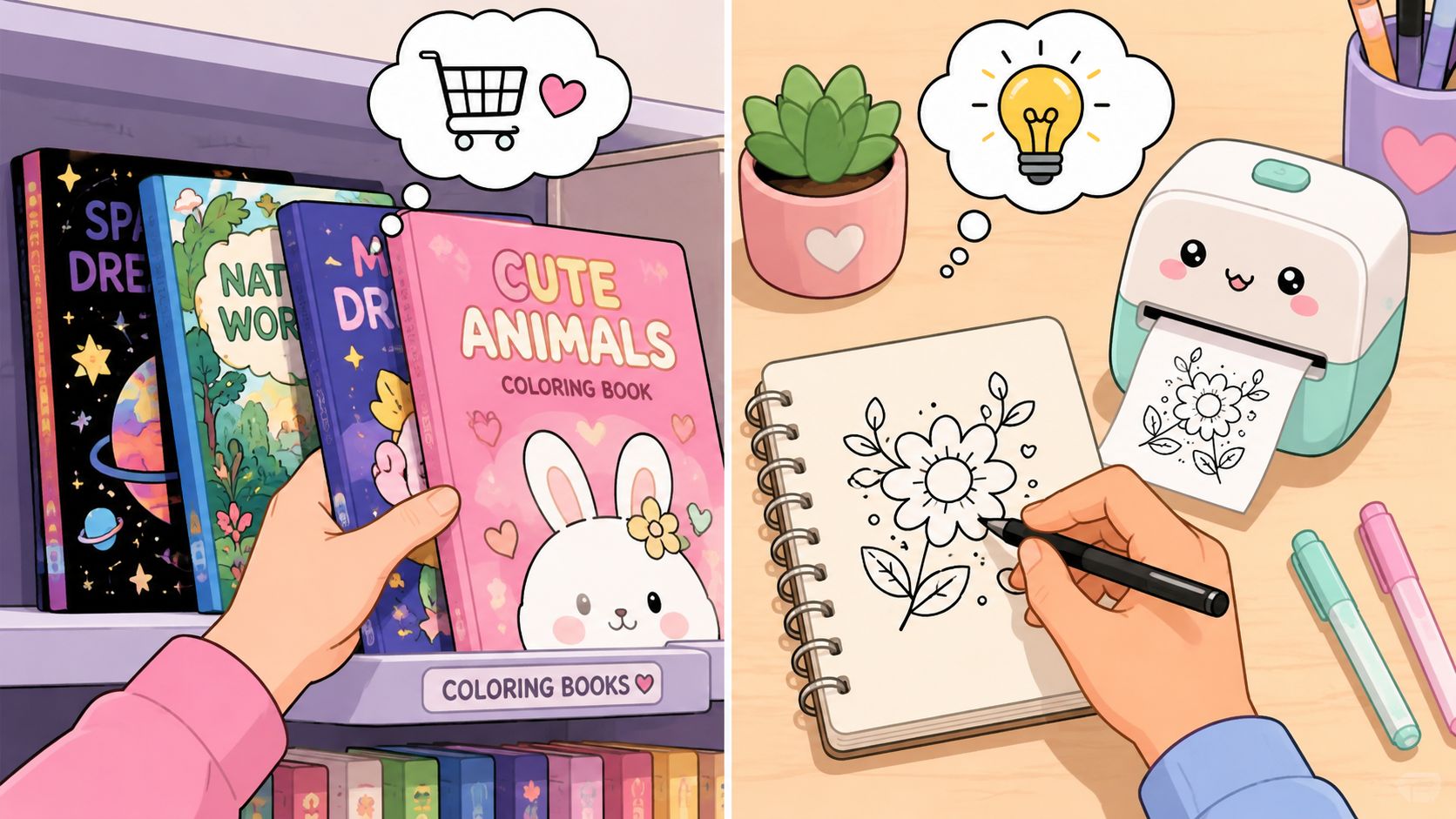
A major issue for hobbyists is that many online listings show only the cover, not the interior pages, which makes it hard to judge line weight or alcohol-marker compatibility before buying, as noted in KDP Easy's coloring book trends guide.
How to shop smarter online
When a listing is light on details, you have to become a bit of a detective. Don't just read the star rating. Read for clues.
Look for these signs:
- Interior photos: Even a blurry customer photo can reveal line thickness and page layout.
- Phrases like bold and easy: Helpful, but only if the preview confirms it.
- Single-sided mention: A useful sign if you plan to use markers.
- Review language about paper: Colorists often mention bleed-through, buckling, or whether they switched to pencils.
If a seller includes only cover art and lifestyle photos, I'd be cautious. A coloring book is an interior product. Hiding the interior is like selling a cookbook by only showing the front cover.
Here's a quick visual walk-through that can help you think like a buyer when choosing supplies and book formats:
The DIY route gives you control
Printing your own pages is often the easiest way to get exactly what you want. You choose the art style, the paper, and whether the page is single-sided. That's a huge advantage if you use Ohuhu brush markers, Copic Sketch markers, glitter gel pens, or a mix of supplies.
DIY works especially well if you:
- Love one specific theme: Mushrooms, bookstores, cottage kitchens, tiny animals.
- Want marker-friendly paper: You can test a few sheets and stick with the one that behaves best.
- Prefer custom sizing: Print smaller for portability, or slightly larger for easier blending.
Buying a book is convenient. Printing your own pages is control.
Artists on marketplaces, membership platforms, and personal shops often offer printable pages. Just check the usage terms, print a test page first, and build your own little stack. Many colorists end up doing both. They keep a store-bought small book for grab-and-go use and a DIY folder for their favorite paper.
Creative Ways to Use Your Small Coloring Book
A small coloring book becomes more useful once you stop treating it like a formal art project. It's not only for “coloring time.” It can slip into everyday life in ways a large book never could.
The travel companion
A compact book and a few markers can rescue dead time. Long train ride. Airport delay. Waiting in the car before an appointment. Those small gaps are perfect for tiny pages.
The key is packing like a minimalist. Bring a zipper pouch with a short marker selection, maybe a warm set, a cool set, a skin tone, and a blender if you use one. Add a scrap sheet behind the page and you're ready.
A small page also lowers the pressure when you're in public. You don't need to spread out. You can color one teacup, one flower bunch, or one sleepy cat and stop there.
The mindful pocket ritual
Some people journal before bed. Some knit. Some color one tiny section of a page while tea cools.
That's where small coloring books feel special. They invite repetition. Same chair, same pouch of pens, same little rhythm of picking colors and filling shapes. The book starts to feel less like a product and more like a ritual object.
A simple routine might look like this:
- After lunch: Fill one shape before you check your phone again.
- After work: Color for a few minutes before making dinner.
- Before sleep: Finish a small motif instead of scrolling.
A small book is easy to return to because it never asks for a big performance.
A thoughtful gift that feels personal
Small coloring books also make lovely gifts because they feel complete without feeling expensive or overwhelming. Pair one with a few carefully chosen tools and the gift feels curated.
Good combinations include:
- Cute and beginner-friendly: Small bold-line book plus gel pens
- For a marker fan: Compact book with single-sided pages plus a protective blotter sheet
- For a detail lover: Tiny floral or fantasy book plus fineliners and pencils
This kind of gift works well because it's easy to start right away. No setup. No big learning curve. Just open the book and color.
Smart Color Planning for Small Illustrations
Small illustrations punish random color choices more quickly than large ones do. On a big page, a slightly off green can disappear into the whole composition. On a tiny page, one muddy choice can take over the entire mood.
That's why planning matters more in small coloring books, especially when you use alcohol markers that are hard to undo.
A simple workflow that saves pages
You don't need an elaborate system. You just need a repeatable one.
Try this:
- Study the page first: Find the biggest shapes and the smallest shapes.
- Choose one main family: Warm cozy browns, soft florals, candy brights, muted forest tones.
- Limit your palette: Fewer colors usually look cleaner in small spaces.
- Make a quick swatch: Test on scrap paper or a printed thumbnail.
- Color the smallest awkward areas first: That helps you avoid boxing yourself into a bad choice.
If you've ever colored a tiny room scene, you know the challenge. The rug, books, lamp, cat, wall art, and mug can all compete. A limited palette keeps them from shouting over each other.
How digital previews reduce guesswork
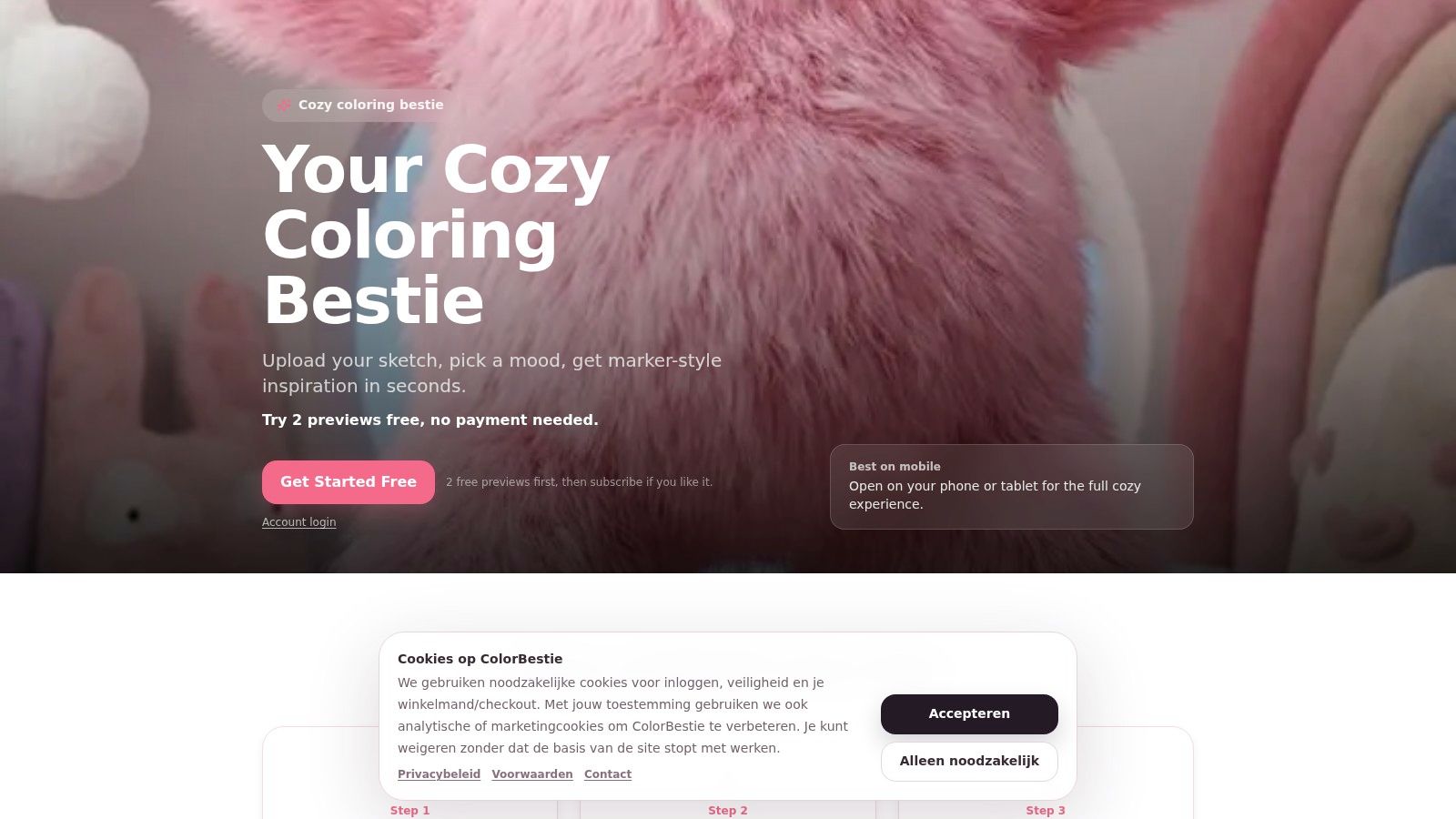
Digital planning is especially helpful when the page is dense and your markers are expensive. Instead of guessing whether peach, tan, and warm gray will feel harmonious in a tiny bakery scene, you can test the overall look first.
A palette tool can help you build a scheme before you ever touch the page. If you want a fast starting point, ColorBestie's Palette Generator can help you explore combinations for marker-style coloring.
What matters most is the habit, not the software. Preview first. Commit second. That one shift saves a surprising number of pages.
Here's a reliable mini-checklist I use:
- Contrast check: Are adjacent areas too similar?
- Repetition check: Did I repeat key colors enough to make the page feel unified?
- Breathing room check: Is there at least one neutral or quiet area?
- Tool check: Do I have these shades in the markers on my desk?
Good color planning in small books feels like packing for a weekend trip. Bring enough variety to enjoy yourself, but not so much that the whole bag becomes chaos.
A small page doesn't need more colors. It needs clearer choices.
If you want a cozy way to test palettes before you commit ink to paper, ColorBestie makes that process much easier. You can explore marker-style color inspiration, preview how a page might look, and translate ideas into real marker choices without the usual trial-and-error on your favorite small coloring books.